
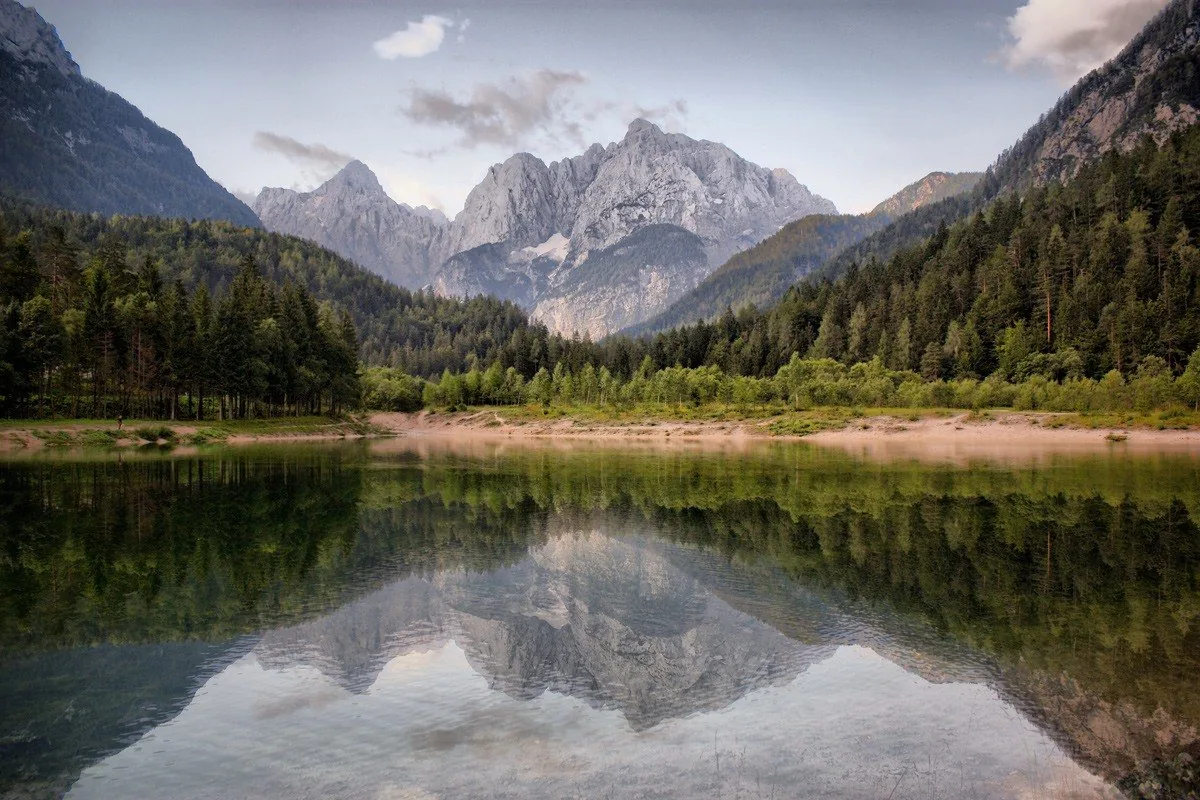
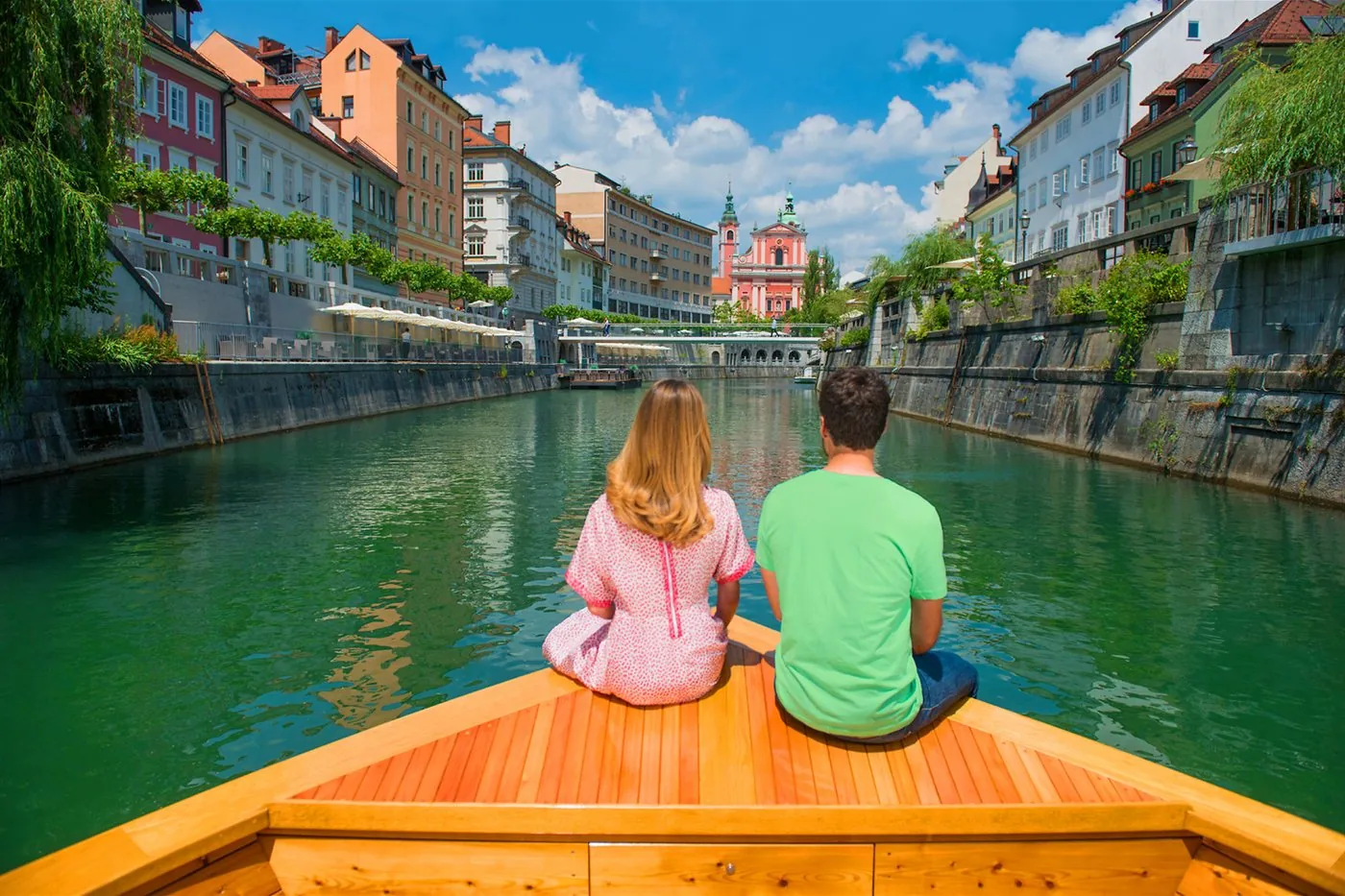
When many of us first arrived in Slovenia, we knew the images that usually appear in photographs. We knew about Lake Bled, Ljubljana Castle, green rivers, and mountains covered in snow. What we did not yet know were the smaller things that would become part of our daily lives.
We did not know how quickly a walk beside the Ljubljanica could become a personal routine. We did not know that a short journey could take us from a busy city street to a forest path, a mountain valley, or a town where everything seems to move a little more slowly. We also did not know how many moments would feel new and familiar at the same time.
Slovenia is often introduced through its size, location, or natural beauty. For us, getting to know it has been more personal. It has meant learning the rhythm of its cities, noticing the care people give to nature, tasting food connected to different regions, and gradually finding our own places within the country.
Many landscapes in one country
One of the first things that makes Slovenia special is how quickly the landscape changes.
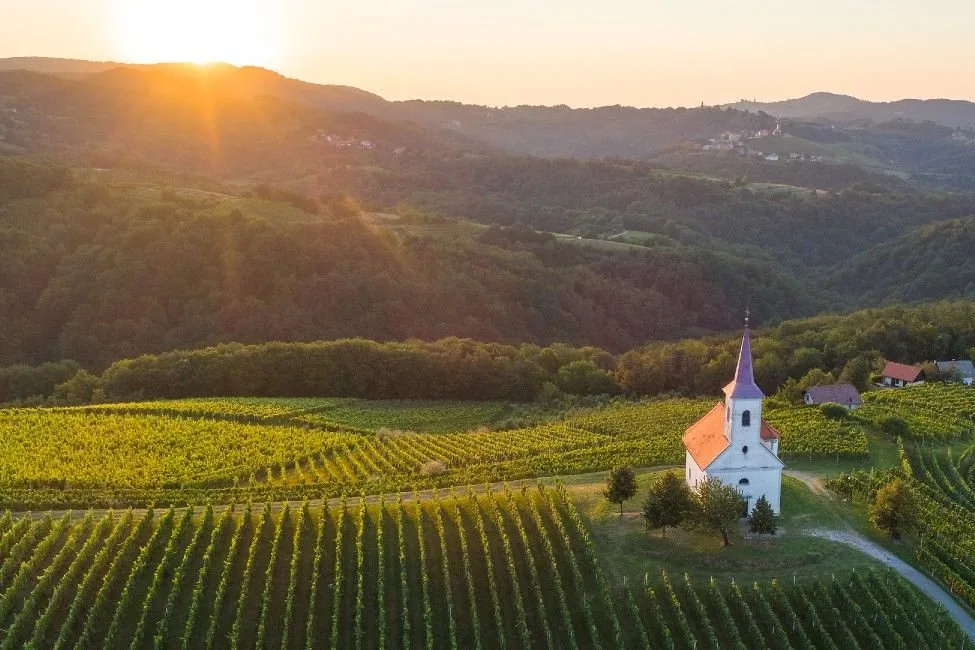
The country lies where the Alpine, Mediterranean, Pannonian, and Dinaric worlds meet. This can sound like a fact from a geography book, but it becomes much more real when you travel through Slovenia. In one direction, the mountains rise above lakes and deep valleys. In another, vineyards and open fields stretch across gentler hills. Further south, the ground opens into caves and karst landscapes. Near the coast, the air, architecture, and light begin to feel Mediterranean.
The distances may be short, but the places do not feel the same. Bled and Bohinj offer two very different experiences of the Alpine landscape. Piran feels different from Maribor. The Soča Valley has its own colours and energy, while the eastern parts of the country carry a quieter rhythm shaped by fields, vineyards, and thermal waters.
This variety makes Slovenia easy to explore slowly. You do not need to see everything at once. The country often rewards returning to the same place in another season, with different weather and a different mood.
A country that reveals itself quietly
Slovenia does not always try to impress you immediately. Some of its most memorable places are not the loudest ones.
They might be a path beside a river, a small town square early in the morning, a local market, a hill above a village, or a bench with a view that you found by accident. Many of us came to appreciate this quietness. It gives you space to observe, walk, and build your own relationship with a place.
Ljubljana is a good example. The centre can be lively, especially when the terraces are full, but the city also has a calm side. A few streets away, you can find neighbourhoods, parks, and river paths that feel completely different. The city does not ask you to rush through it. It becomes familiar through repetition.
The same is true across the country. Slovenia is full of places that become meaningful because you return to them.
The rhythm of everyday life
Every country has small habits that are difficult to notice from the outside.
After spending time in Slovenia, many of us began to recognise a particular rhythm. Plans are often made clearly. Time is respected. Nature is not treated only as something to visit on holiday. It is part of regular life.
On a sunny weekend, hiking paths, cycling routes, lakes, and parks fill with people. A walk can be a social activity, a form of rest, or simply part of the day. Even in the cities, green spaces are never far away.
There is also a certain calmness in everyday interactions. At first, this can feel more reserved than the warmth and spontaneity many of us associate with Macedonia. With time, however, we learned that closeness is expressed differently. It may grow more slowly, but it can become very sincere.
These differences are part of the experience. Getting to know another country also means learning that kindness, friendship, and belonging do not look exactly the same everywhere.
What felt familiar to us
Moving between Macedonia and Slovenia also reveals unexpected similarities.
Both countries are small enough for places to feel connected. In both, mountains shape the landscape and the way people spend their free time. Food carries regional stories. Family traditions remain important, even as everyday life becomes more modern. People are proud of where they come from, often through local customs, language, music, and food.
There are differences, of course. That is what makes the experience interesting. Yet many Macedonian students discover that Slovenia does not feel completely distant. Some landscapes bring back memories of home. Certain words sound familiar. A shared meal can create the same feeling of comfort, even when the dishes are different.
Over time, these small connections matter. They make the new country easier to understand without taking away from what makes it distinct.
Nature is never far away
It is difficult to speak about Slovenia without speaking about nature.
More than half of the country is covered by forest, and the connection between settlements and the natural landscape is visible almost everywhere. You can feel it when mountains appear at the end of a city street, when a river shapes the centre of a town, or when a forest begins just beyond a residential neighbourhood.
For many of us, this became one of the most valued parts of living in Slovenia. Nature does not always require a large plan. It can be a short walk after a long day, a weekend by a lake, a bicycle ride, or a train journey to a nearby town.
Slovenia encourages you to notice the seasons. Spring changes the rivers and fields. Summer brings long evenings and visits to lakes or the coast. Autumn fills forests and vineyards with colour. Winter transforms the mountains and gives the cities a quieter atmosphere.
The same place can tell a different story every few months.
A place that becomes part of your story
No introduction can fully explain a country.
Slovenia is not only Bled, Ljubljana, Triglav, caves, castles, and photographs of green landscapes. It is also the first street you learn without using a map. It is the café where people begin to recognise you. It is a train ride that becomes familiar, a word you finally pronounce correctly, or a place you show to someone who has just arrived.
For the members of our community, Slovenia has become many things. It is where we study, work, build friendships, organise events, and create new memories. For some, it is temporary. For others, it becomes a long-term home. In both cases, it leaves a mark.
Through the stories in this section, we want to show Slovenia as we have come to know it. Not as a checklist of attractions, but as a country made of landscapes, people, traditions, and small moments that stay with you.
Welcome to Slovenia. Take your time getting to know it.