
Slovenian heritage is often presented as a long list.
There are castles, churches, old towns, caves, crafts, industrial sites, traditional foods, festivals, and protected landscapes across the country. A list proves that there is a lot to see, but it does not always explain why a place matters.
A more useful approach is to choose several specific stories and spend time with them.
The four below are very different. One is embedded in the streets of Ljubljana. One lies beneath the Karst. One shaped the working life of Idrija. One remains active in apiaries, schools, associations, art, and family knowledge.
Together, they show that heritage can be architectural, natural, industrial, and living at the same time.
Plečnik changed Ljubljana through everyday routes
Jože Plečnik did not redesign Ljubljana through one monumental building.
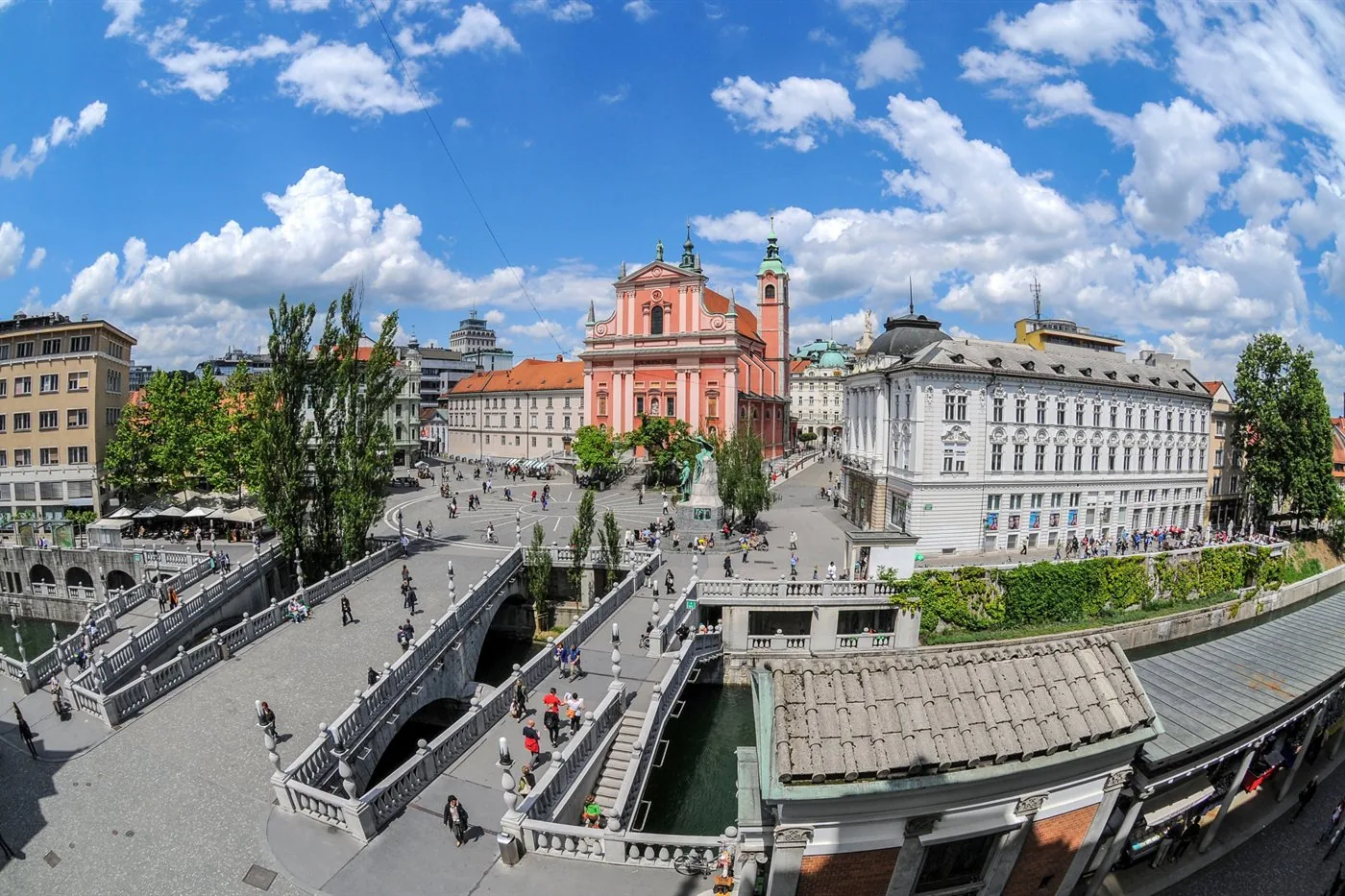
He worked through a network of streets, bridges, markets, embankments, public spaces, and institutions. His interventions connected existing parts of the city and gave ordinary movement a ceremonial quality.
The Triple Bridge turns a river crossing into a public gathering space. The covered market follows the Ljubljanica rather than turning away from it. The National and University Library creates a carefully staged movement from a darker entrance toward the reading room. The route along the river uses trees, columns, stairs, and small architectural elements to create continuity.
UNESCO inscribed selected works of Plečnik in Ljubljana on the World Heritage List in 2021 as an example of human-centred urban design.
The phrase is useful because his work is not experienced only by architecture experts. People cross it on the way to work, meet beside it, buy food within it, and sit near it.
Plečnik's heritage remains active because the city continues to use it.
Škocjan Caves reveal the scale beneath the Karst
The Karst landscape does not reveal everything from the surface.
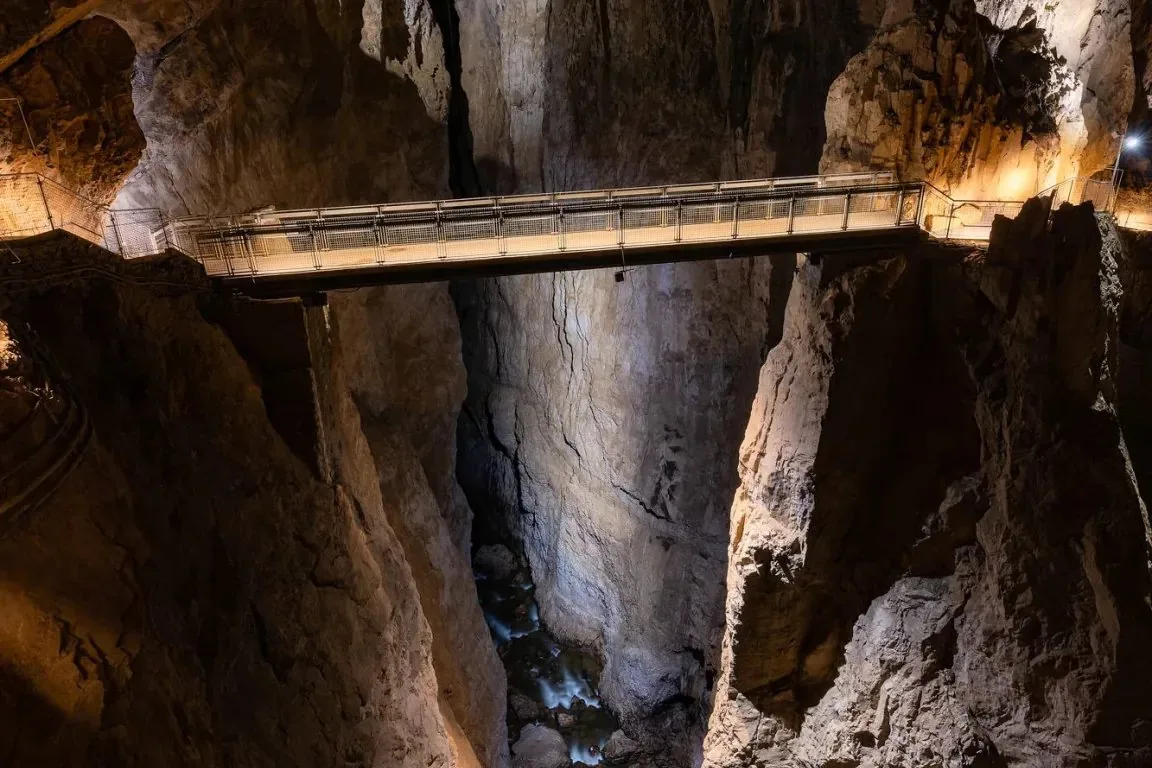
At Škocjan, the Reka River disappears underground and passes through a vast cave system with one of the largest known underground river canyons.
The experience is defined by scale. Paths and bridges move above the river, while the walls rise far beyond the normal dimensions of a tourist cave. The sound of water and the darkness make the space feel active rather than decorative.
UNESCO inscribed Škocjan Caves on the World Heritage List in 1986 because of their exceptional geological and geomorphological importance.
The site is also connected with the wider Karst environment. Water, rock, caves, settlements, and human use of the landscape form one system.
For students in Nova Gorica, Koper, and the Primorska region, the Karst is part of the wider environment rather than a distant attraction. Its dry stone walls, bora wind, villages, caves, and disappearing rivers shape a distinct regional identity.
Škocjan is the place where that hidden geology becomes impossible to ignore.
Idrija was shaped by mercury
Idrija developed around one of the world's historically important mercury mines.
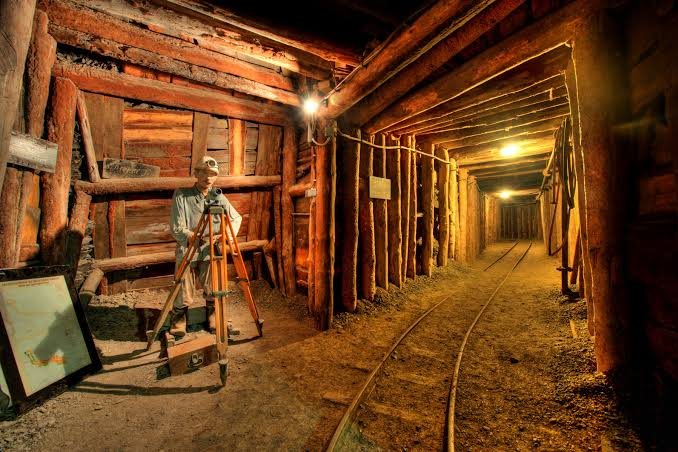
Mining affected the town's streets, buildings, technical knowledge, health, working conditions, food, and family life. The heritage is therefore not limited to underground tunnels.
The former mine entrance known as Anthony's Main Road gives visitors access to the mining story. Gewerkenegg Castle, once connected with mine administration and storage, now houses the Idrija Municipal Museum. Technical structures and water systems show how much organisation was required to extract and process mercury.
The mercury heritage of Idrija and Almadén in Spain was inscribed on the UNESCO World Heritage List in 2012.
The story should not be romanticised. Mercury brought economic importance and specialised knowledge, but mining was dangerous and carried serious human and environmental costs.
Idrija's value lies in showing the full system around an industrial town. Work, technology, risk, domestic life, and local identity developed together.
Even Idrijski žlikrofi, now one of Slovenia's best-known protected dishes, belong to this larger working environment.
Beekeeping is heritage that remains alive
Slovenian beekeeping is not preserved behind glass.
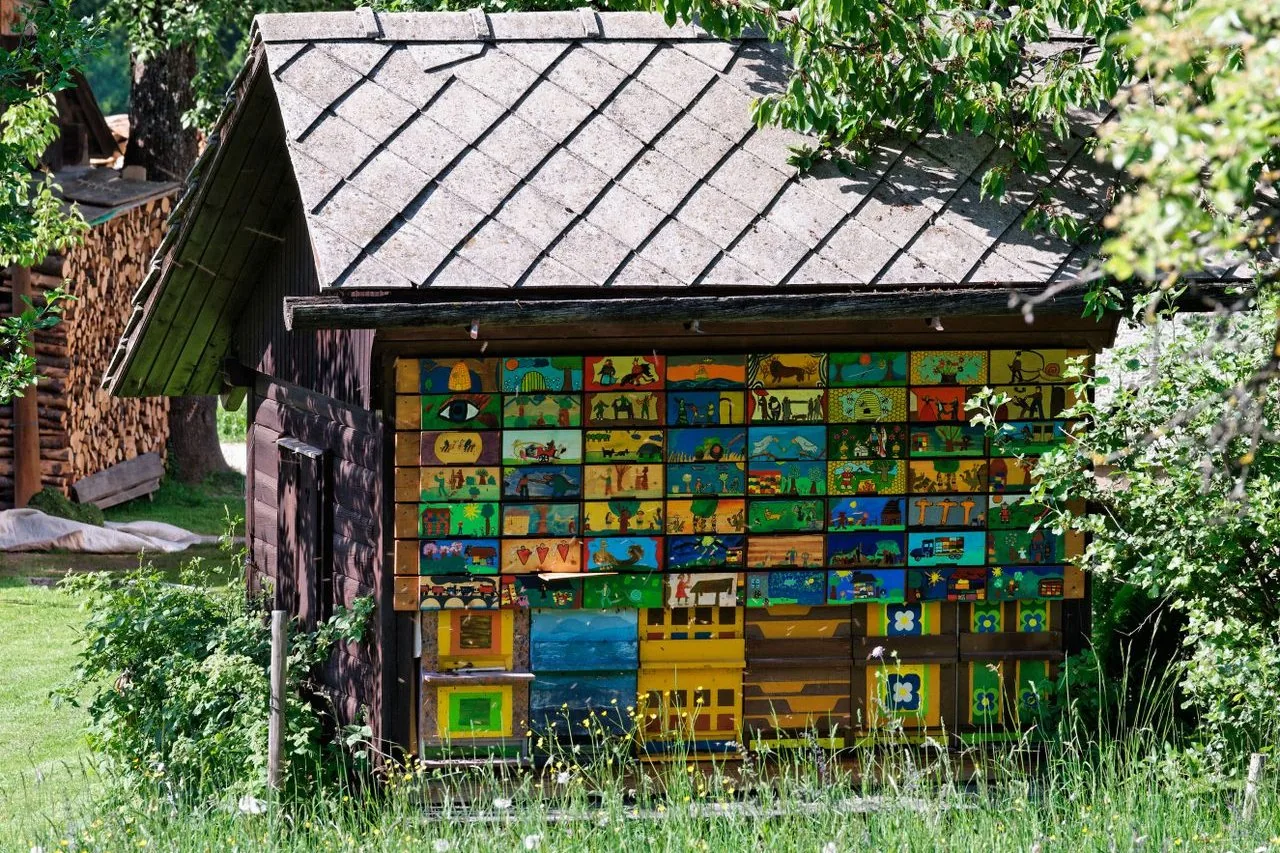
Beekeepers continue to care for colonies, share knowledge, breed the Carniolan bee, build and maintain apiaries, produce honey and other products, and organise through local societies.
UNESCO inscribed “Beekeeping in Slovenia, a way of life” on the Representative List of the Intangible Cultural Heritage of Humanity in 2022.
The tradition includes practical knowledge, but also language, art, architecture, education, and social organisation. Painted beehive panels are among its most recognisable visual forms. Traditional apiaries create a distinctive structure within rural landscapes.
Knowledge is passed within families, clubs, schools, associations, and between experienced and newer beekeepers.
This makes beekeeping different from a static monument. Its survival depends on people continuing the practice and responding to new environmental pressures.
The heritage is visible in the hive, but its real centre is the relationship between community, pollinators, and landscape.
Heritage belongs to several parts of the country
These four stories are geographically distributed.
Plečnik's work is part of Ljubljana's daily movement. Škocjan belongs to the Karst and the Primorska environment. Idrija connects industrial history with western Slovenia. Beekeeping appears across rural and urban communities throughout the country.
Other regions carry equally important stories. Maribor has the old vine and the Drava. Celje is connected with the Counts of Celje and its castle. Ptuj has Roman layers and Kurent traditions. The coast has Venetian urban heritage and salt-making landscapes. The Soča Valley carries memories of the First World War alongside older settlement and pastoral traditions.
No single place represents Slovenian heritage.
The stronger picture appears when different regions are allowed to keep their own stories.
Preservation is a present-day decision
Heritage does not survive only because it is old or officially recognised.
It survives through maintenance, research, careful tourism, community knowledge, public funding, education, and limits on damaging use.
Visitors also participate in preservation. They can follow marked routes, respect protected spaces, avoid touching vulnerable surfaces, use authorised guides, and learn the context rather than collecting only images.
Plečnik's bridges still carry daily life. The Reka still moves through Škocjan. Idrija continues to interpret a difficult mining history. Beekeepers continue to work with living colonies.
The past remains present because somebody keeps taking responsibility for it.