
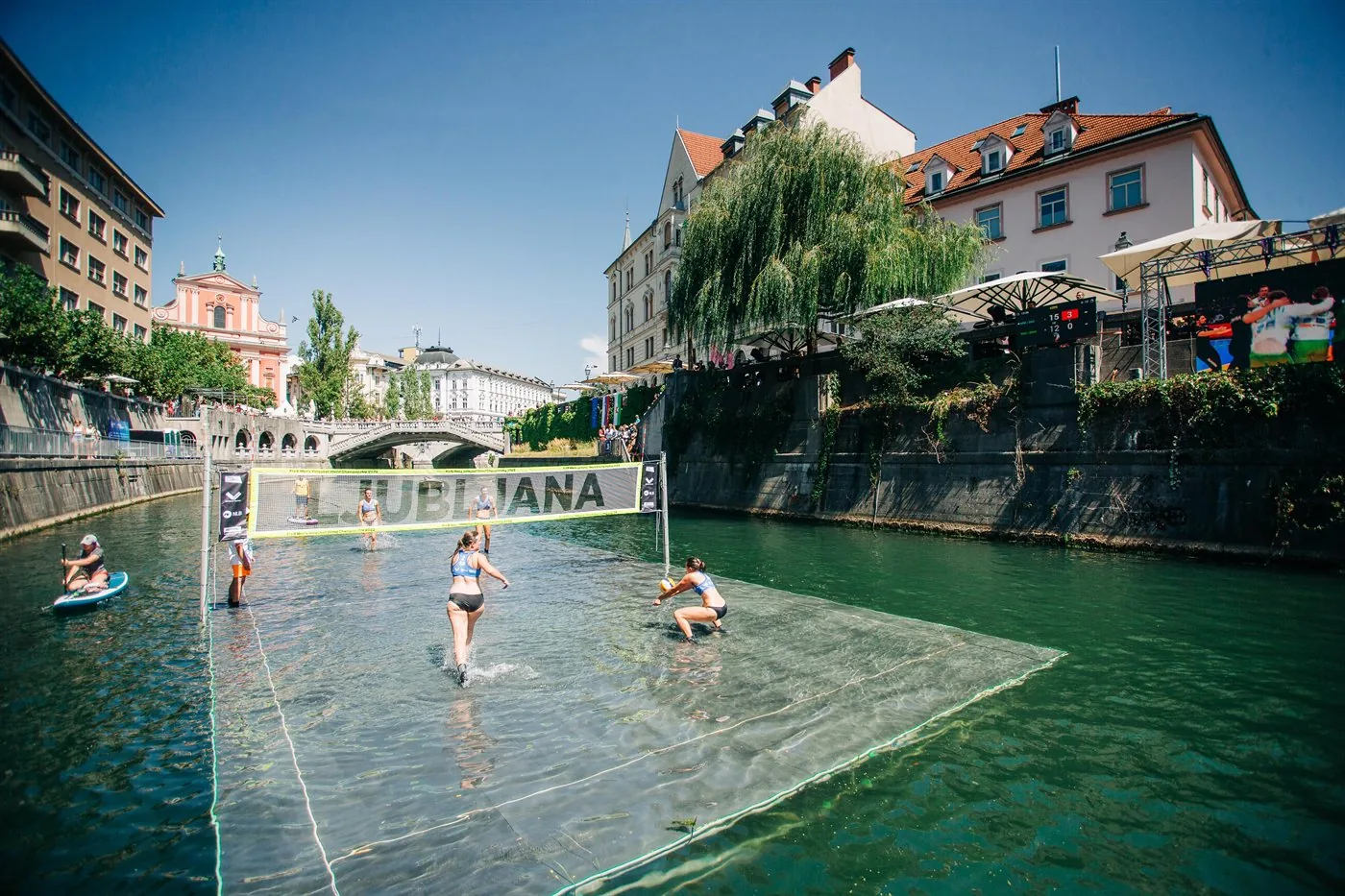
Ljubljana often looks very simple on a map. The old centre sits around the river, the castle rises above it, and many recognisable places are close enough to reach on foot.
Living in the city is more layered than that.
For many members of our community, Ljubljana became familiar through repeated routes rather than famous landmarks. It was the walk from a faculty to the centre, a meeting beside Prešeren Square, a Saturday stop at the market, a break in Tivoli, or an evening in Trnovo. These ordinary movements slowly turned a new city into a personal one.
This is one Ljubljana story. It is not meant to describe the experience of every Macedonian student in Slovenia. Many members of MSOS study and build their lives in Maribor, Nova Gorica, Celje, Koper, and other places across the country. Each city creates a different relationship with Slovenia. Here, we focus only on the details that make Ljubljana itself memorable.
The river is where the city comes together
The Ljubljanica is not only a view through the centre. It is one of the main ways people use and understand the city.
A walk can begin near the market, pass the Triple Bridge and Prešeren Square, continue toward Congress Square, then move through Krakovo and Trnovo without feeling like a planned sightseeing route.
The centre changes throughout the day. In the morning, deliveries arrive and cafés open. Around midday, students and workers cross the bridges in every direction. In the afternoon, the terraces fill. Later in the evening, people sit closer to the water or continue toward quieter parts of the river.
For newcomers, the bridges become useful reference points. The Triple Bridge means the centre. Dragon Bridge means the market is near. Cobblers' Bridge opens the route toward the older streets and Trnovo. After a while, the city can be read through these crossings without checking a map.
The river makes Ljubljana feel smaller and more connected. Even when plans are unclear, meeting “by the river” is usually enough to begin.
Saturday morning begins at the market
The Central Market is one of the places where Ljubljana feels least like a postcard and most like a living city.
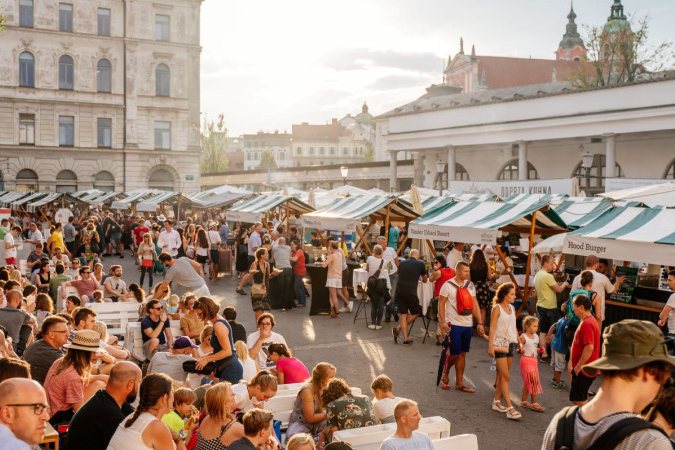
Its outdoor stalls spread across Vodnik Square and Pogačar Square. Plečnik's covered market follows the curve of the Ljubljanica. People come for fruit, vegetables, bread, cheese, flowers, oil, and other local products, but shopping is only part of the experience.
Saturday morning has its own rhythm. Some people arrive with a clear list. Others stop for coffee, meet someone they know, or walk through the stalls without buying much. The market brings together older residents, families, students, farmers, visitors, and people who simply enjoy being in the centre before it becomes busier.
For students from Macedonia, the market can also feel unexpectedly familiar. The products are different, the organisation is different, and the atmosphere is calmer than many markets at home, but the social role is recognisable. A market is rarely only about food. It is also a place where a city sees itself.
Our recommendation is simple. Do not rush through it between two landmarks. Visit early enough to notice how people actually use it.
Trnovo is where the centre slows down
A few minutes south of the busiest streets, Ljubljana changes character.
Trnovo and Krakovo feel close to the centre, but they have a more residential and local rhythm. Small houses, gardens, the Gradaščica channel, Trnovo Church, and quieter streets make the area feel separate from the tourist route without being far away.
Trnovo Bridge is one of the clearest examples of how Jože Plečnik shaped the city. The bridge does more than cross water. Its width, stone elements, and rows of birch trees make it feel like a small public square.
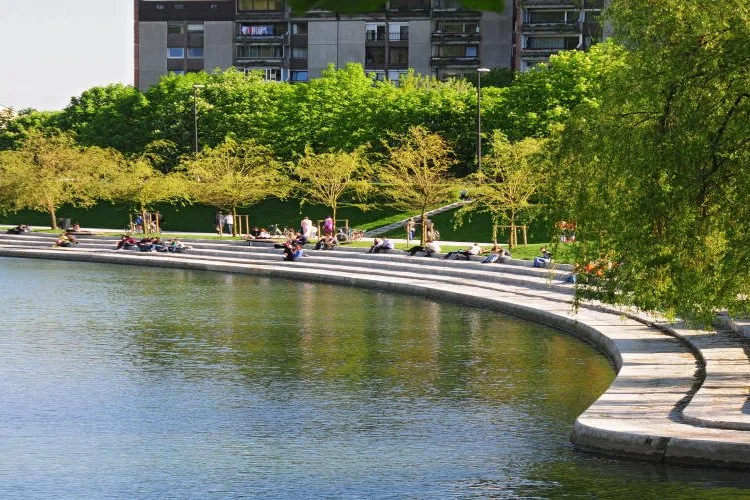
Further along the river, Trnovski pristan becomes especially lively during warmer months. Its broad stone steps descend toward the Ljubljanica, and people sit there in groups, often with drinks, snacks, music, or no plan at all. Among younger residents, it is sometimes described as Ljubljana's beach.
This is one of the places where many students understand that social life in Ljubljana is not always organised around a venue. Sometimes the place itself is enough.
In summer, arrive before sunset. Sit on the steps, watch the light change on the river, and let the evening develop on its own.
Tivoli and Rožnik are part of the weekly routine
Tivoli is not only a park to visit once. For many people, it is part of the city's regular rhythm.
Students pass through it, run there, meet friends, sit on the grass, visit exhibitions along the Jakopič Promenade, or continue uphill when they need more distance from the city. The park leads naturally toward Rožnik and Šiška Hill, creating a quick transition from formal city space to forest paths.
That transition is one of Ljubljana's strongest qualities. Within a relatively short walk from the centre, traffic becomes quieter and the route begins to feel like a small escape. Rožnik is not a demanding mountain trip. That is exactly why people return to it. It works on an ordinary afternoon.
For students living in other Slovenian cities, this relationship between urban life and nearby nature takes a different form. Maribor has Pohorje and the Drava. Nova Gorica opens toward the Soča Valley, the Karst, and the border landscape. Koper and the Primorska region have the coast and Mediterranean surroundings. Celje has its own hills, river paths, and historic centre. Tivoli and Rožnik are Ljubljana's version of something many Slovenian cities offer in their own way.
Metelkova shows another side of Ljubljana
Ljubljana's most polished images usually focus on the castle, bridges, façades, and river.
Metelkova shows a different city.
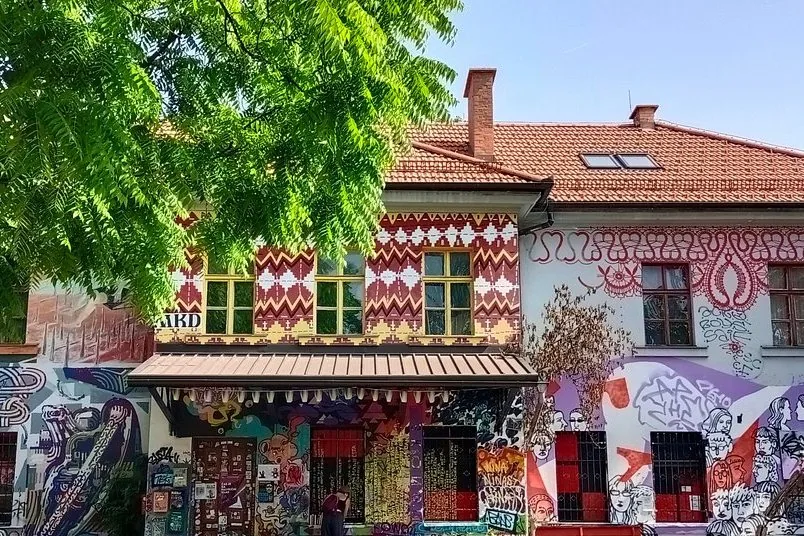
The autonomous cultural centre developed in former military barracks and has been shaped by artists, volunteers, organisers, musicians, and different alternative communities. Its buildings are covered with murals, sculptures, mosaics, and interventions that continue to change.
During the day, the area can feel almost like an open-air gallery. In the evening, it becomes a place for concerts, club nights, performances, and gatherings. It does not need to represent Ljubljana as a whole. Its importance lies in showing that the city has spaces that are less polished and more experimental.
The wider Metelkova area also includes museums and cultural institutions, creating an unusual contrast between formal and independent culture within a few streets.
For someone who has only seen the historic centre, Metelkova can feel like a different city. That contrast is worth seeing.
Ljubljana is learned through small repetitions
The places that become most important are not always the ones people recommend first.
They may be the bakery near your bus stop, the table where your group always meets, a bench in Tivoli, the route through Trnovo, or the corner beside the river where you wait for friends. These places do not appear on a list of attractions, but they are where belonging begins.
Ljubljana is compact enough for routines to form quickly. After a few weeks, the centre stops feeling like a destination. It becomes the space between other parts of life.
That familiarity is one reason many students become attached to the city. At the same time, Ljubljana should not be treated as the only window into Slovenia. A student in Maribor, Nova Gorica, Celje, Koper, or another town will discover different habits, landscapes, and local communities.
Our Ljubljana is therefore only one chapter.
It begins beside the river, passes through the market, slows down in Trnovo, climbs toward Rožnik, and sometimes ends under the lights of Metelkova. The exact route changes, but the feeling is the same. The city becomes yours when you stop trying to see it all and start returning to the places that matter to you.