
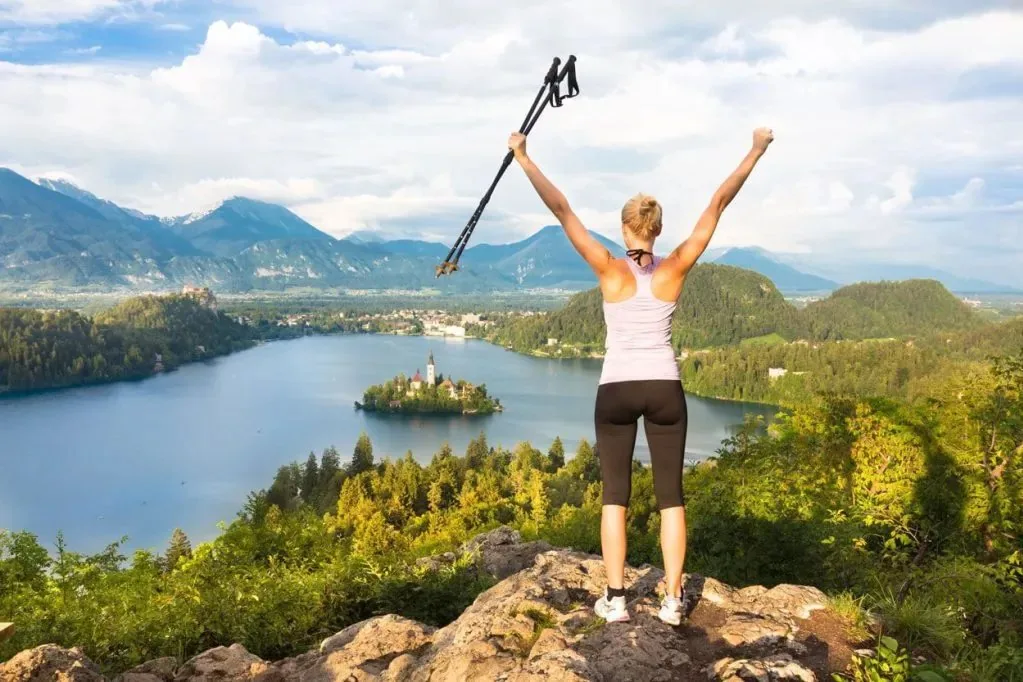
Most people first meet Bled through one photograph.
The lake is still, the island sits in the middle, the church rises above the trees, and the castle balances on the cliff. The image is beautiful, but it can make Bled look like a single viewpoint rather than a place with several different moods.
The best way to understand the lake is simple. Walk around it.
The full route is about six kilometres. It is not a demanding hike, but it changes the experience completely. The island moves from one side of the frame to the other. The castle disappears, then returns. Busy terraces give way to quieter stretches, swimming areas, rowing facilities, forest edges, and views toward the Karavanke and the Julian Alps.
Bled becomes more interesting when the famous image refuses to stay still.
Walk the full circle
The eastern side of the lake is the most formal part of Bled.
Here, hotels, cafés, the lakeside promenade, and the main viewpoints create the version most visitors see first. This is a good place to begin, but not a good place to stop.
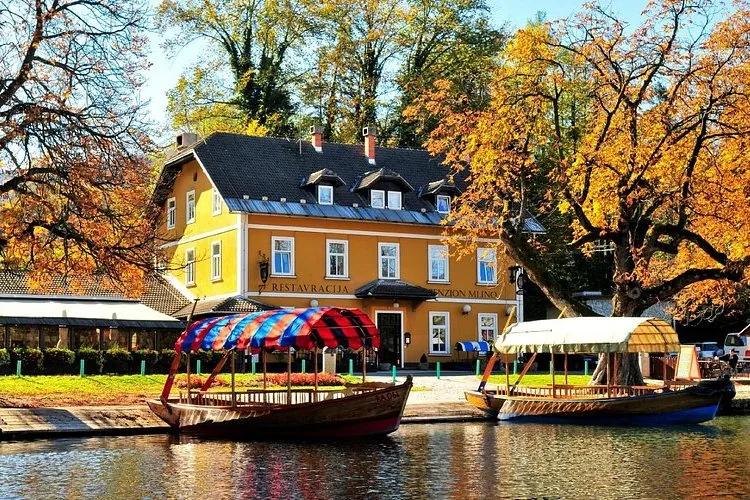
Continue south toward Mlino and the atmosphere becomes less staged. The road and path remain close to the water, while the island appears larger and more detailed. Traditional pletna boats leave from this side of the lake, and small rowing boats can also be rented.
Further west, the route reaches Velika Zaka. This side feels more open and active. There are rowing facilities, grass, access to the water, and a clearer view of the castle across the lake.
The northern shore offers another shift. The castle cliff rises directly above the path, and the island begins to appear further away. By the time the route returns to the eastern promenade, the original view feels different because you have seen what surrounds it.
Our recommendation is to avoid treating the loop as exercise that needs to be completed quickly. Stop often. The changing angle is the main point.
Mlino is where the island feels closest
The island dominates almost every image of Bled, but it is from the southern shore near Mlino that it begins to feel like a real place rather than a symbol.
The traditional pletna is one of the best-known ways to reach it. The boat is rowed standing up by a pletnar, using a technique associated with Bled. The experience is calm, partly because motorised traffic on the lake is restricted.
It is also possible to rent a rowing boat and make the journey independently. This changes the pace. The crossing becomes something you participate in rather than only observe.
On the island, the staircase, church, bell tower, and small buildings create a compact space. It can become crowded, especially during the busiest periods, so the quieter part of the experience may be the journey itself.
Even without visiting the island, Mlino is worth a pause. From here, the lake no longer looks like the standard postcard. The island is closer, the castle sits further to the side, and the mountains take up more of the background.
Ojstrica is short, steep, and worth the effort
Near Velika Zaka, a marked forest path leads toward Ojstrica.
The climb is short, often described as around twenty minutes, but it is steeper than the lakeside walk. Good footwear is more useful here than a perfect outfit for photographs.
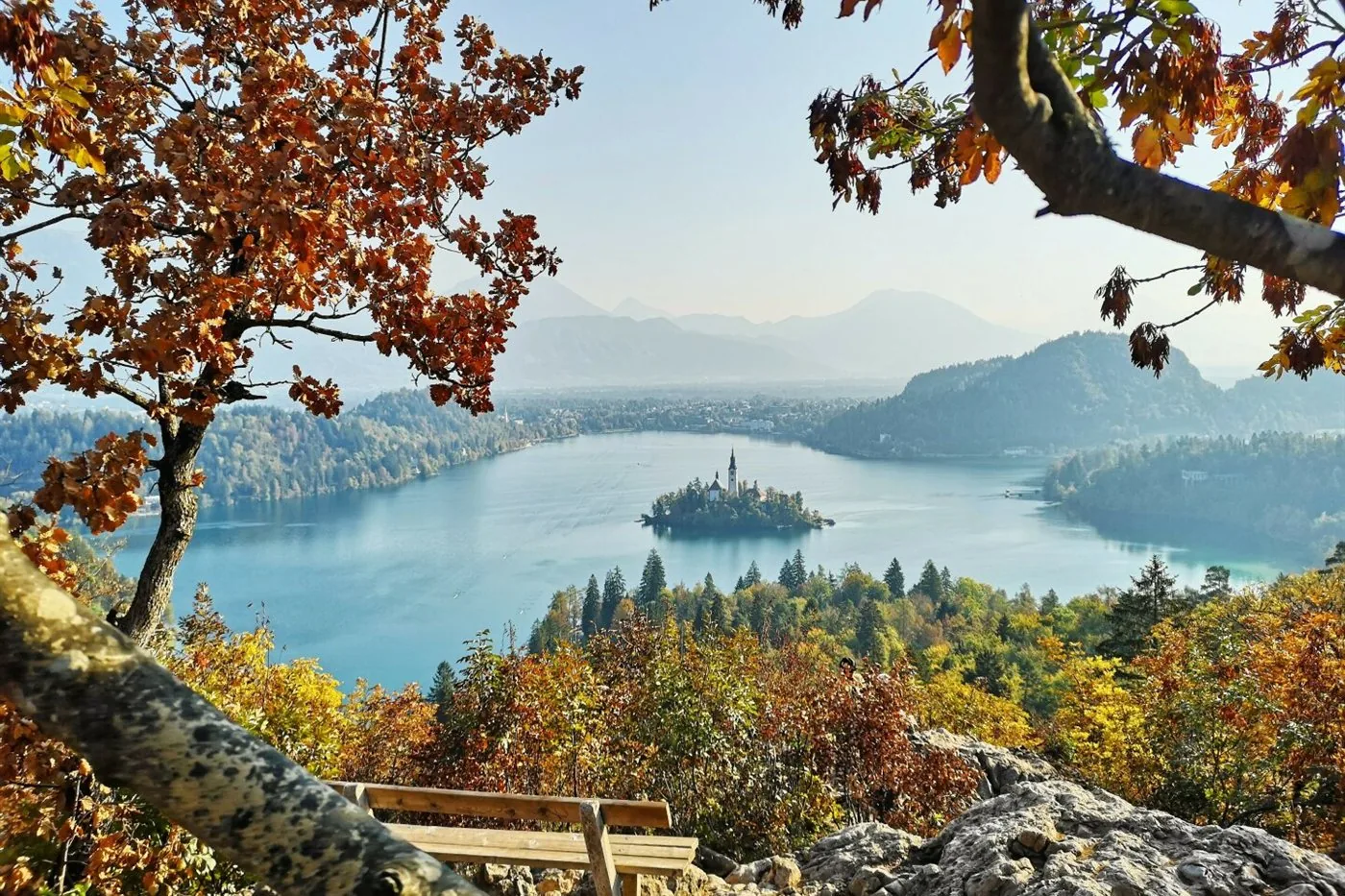
At the top, the lake appears in the composition many people recognise. The island sits below, the castle rises on the opposite cliff, and the mountain ranges form the background.
The difference is that the view now feels earned.
Ojstrica is not a hidden place, and the small summit can become busy. Arriving earlier in the morning or outside the main summer hours gives the space a calmer character. Mala Osojnica, reached by a longer climb, offers another elevated view.
The important thing is not to collect both viewpoints as quickly as possible. Choose one, take time at the top, and notice how the paths, settlements, forest, and lake fit together.
The quieter side begins at Zaka
Velika Zaka changes the rhythm of the walk.
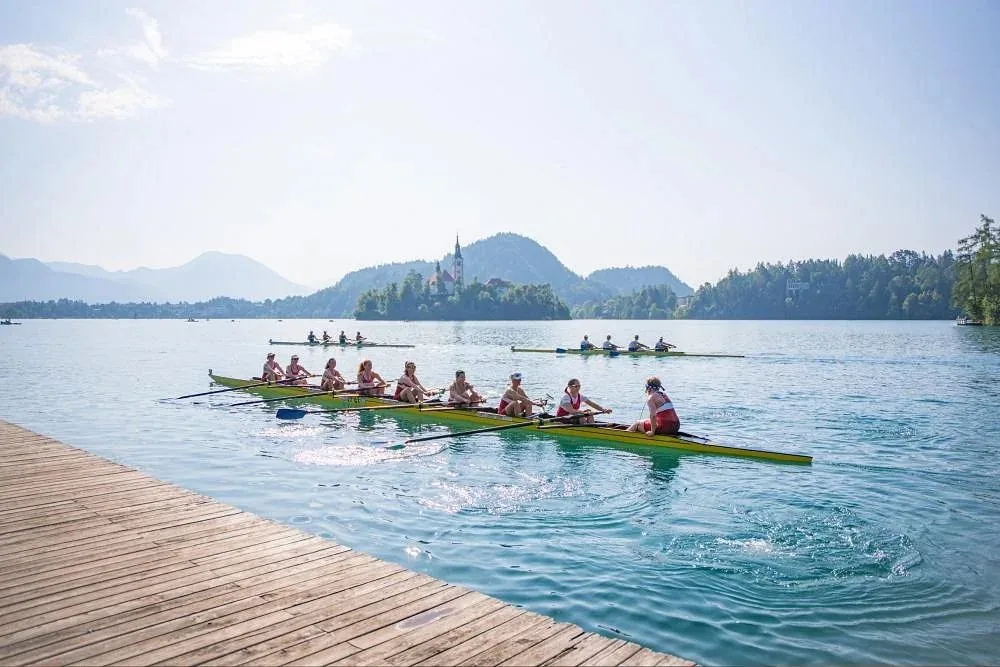
The lake opens up, the path becomes less formal, and the activity on the water becomes more visible. Bled has a long rowing tradition, and the western side is where this part of the place feels most present.
During warmer months, people swim, sit on the grass, rent boats, or continue into the forest. In colder seasons, the same area can feel almost empty.
This side of Bled is useful because it breaks the illusion that the lake exists only for viewing. It is also a working and recreational space.
From Zaka, the route can continue toward the northern shore or turn into a longer outing with Ojstrica. The choice depends on the day, weather, and energy. No additional attraction is necessary.
Sometimes Bled is best experienced through one complete walk and enough time to sit by the water.
The castle is more than a distant silhouette
Bled Castle is easy to recognise from below, but its position becomes clearer when you look back over the lake from the cliff.
The castle stands above the northern shore and is described as the oldest castle in Slovenia in written sources. Its terraces provide a broad view of the lake, island, settlements, and mountains.
The visit adds historical context, but the strongest part is spatial. From above, the route around the lake becomes visible. Mlino, Zaka, the island, and the hotel area can be understood as one connected landscape.
The climb can be made on foot from the town side. It is steep enough to feel separate from the easy lake loop.
A castle visit is not essential for every Bled trip. The lake can stand on its own. Yet for someone interested in how the place developed and how the famous view is constructed, the height adds another useful perspective.
Finish with kremšnita, but do not let it define the whole day
Bled cream cake, commonly called kremšnita, has become part of the town's identity.
Its layers of puff pastry, vanilla cream, and whipped cream are simple, recognisable, and closely connected with the visitor experience. After walking around the lake or climbing to a viewpoint, it makes sense as a final pause.
Still, Bled has more local food than one dessert. The surrounding area also offers trout, dairy products, honey, bread traditions, and ingredients connected with nearby farms and villages.
The cake works best as part of the day, not as a task that needs to be checked off.
Sit down after the walk. Notice how the lake looks from the eastern shore now that you have seen it from every side.
The photograph may be the same. Your understanding of it will not be.