
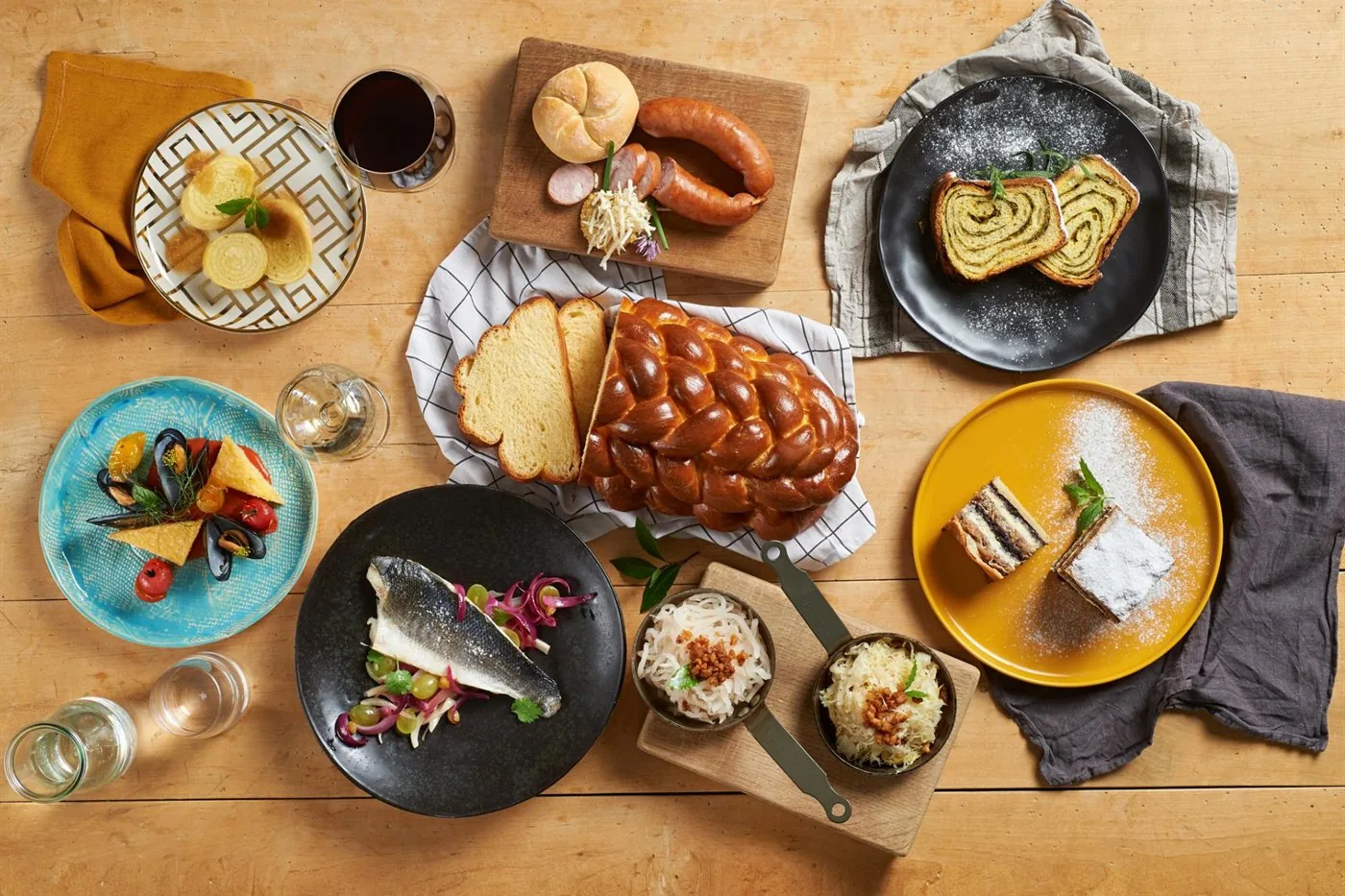
The first mistake people make with Slovenian food is looking for one dish that explains the whole country.
Slovenia is too regionally varied for that.
Food changes between the Alps, the coast, the Karst, the Soča Valley, central Slovenia, Štajerska, Prekmurje, Bela krajina, and other local environments. Ingredients follow climate, farming, trade, and neighbouring culinary traditions. A meal near Koper may feel very different from one in Maribor, Idrija, Bovec, or Murska Sobota.
For a useful first taste, it is better to choose a small number of dishes and understand where they come from.
The six below are not a complete list. They are a route through the country.
Štruklji change from table to table
Štruklji are rolled dumplings made with dough and filling, but that simple description hides how varied they can be.
They may be boiled or baked. Fillings can include cottage cheese, walnuts, tarragon, apples, poppy seeds, or other ingredients. Some versions are savoury, some sweet, and some work as a side dish rather than a dessert.
This flexibility is what makes štruklji useful as a first introduction. They are recognisably Slovenian, but they do not belong to one single recipe.
In a mountain hut, cheese-filled štruklji may arrive after a hike. At a family table, another version may be connected with a holiday or local habit. In a restaurant, the dish may be adapted into a more modern form.
Do not ask only whether you have tried štruklji. Ask which kind.
Jota belongs to the west
Jota is a thick stew commonly associated with Primorska, the Karst, and the western part of Slovenia.
Its core ingredients usually include sauerkraut or sour turnip, beans, and potatoes. Some versions include smoked meat or sausage. The result is sour, filling, and practical, especially in colder weather.
For people from Macedonia, the combination of beans, preserved vegetables, and slow cooking may feel familiar even when the flavour is different.
Jota makes sense in relation to the region. The Karst and Primorska carry Central European, Mediterranean, and local rural influences at the same time. The dish is not designed to look elegant. It is designed to warm and satisfy.
Try it in colder months, preferably in a place that treats it as a normal local meal rather than a decorative tasting portion.
Idrijski žlikrofi have a very specific shape
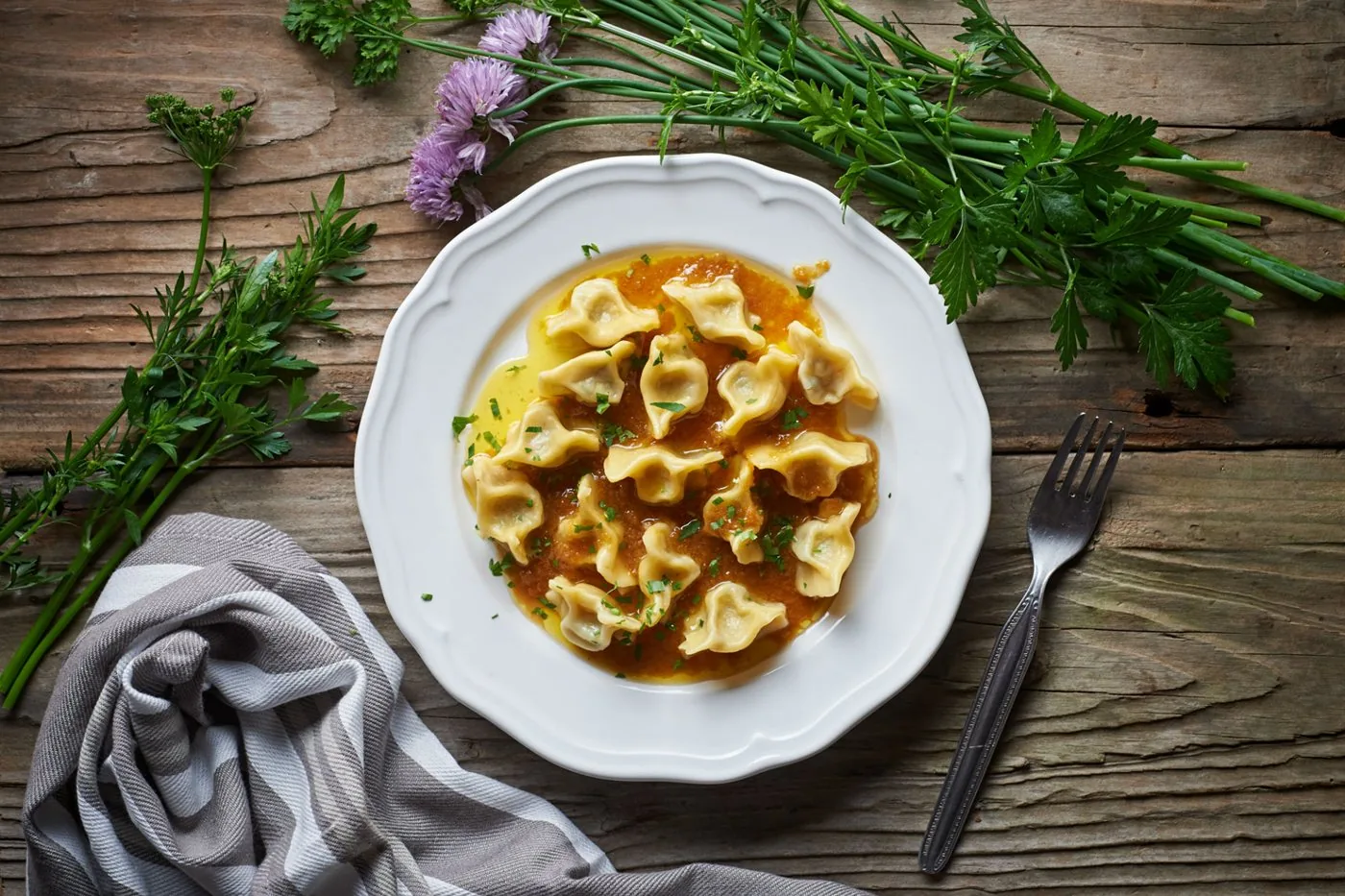
Idrijski žlikrofi are small filled dumplings connected with the town of Idrija.
Their potato-based filling commonly includes onion, fat, and herbs. The folded shape is distinctive and is often compared with a small hat.
The dish has protected status at European level, which means that its name and preparation are tied to a defined traditional specification.
Žlikrofi are usually served with sauce, meat, or as part of a fuller meal. In Idrija, they also connect food with the town's industrial and mining history. Practical, filling dishes were part of life in a demanding working environment.
This is a useful reminder that heritage is not only found in buildings and museums. It can survive in the shape of a dumpling.
Frika tastes like the Soča Valley
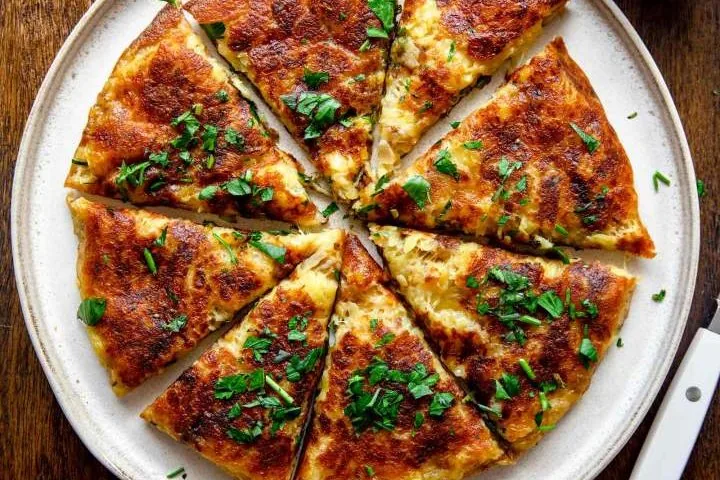
Frika is strongly associated with the Soča Valley and the area around Tolmin, Kobarid, and Bovec.
It is made from cheese and potatoes, with regional and household variations. The ingredients are simple, but the dish is rich and direct.
Frika belongs to a landscape of mountain pastures, dairy traditions, and physically demanding work. It is not a light snack. It is the kind of food that makes more sense after time outdoors.
For students and visitors based in Nova Gorica or the wider Primorska region, the Soča Valley is not a distant idea. It is part of the broader regional environment and one of the clearest places to understand how landscape shapes food.
Try frika where local cheese is treated as the centre of the dish, not as a garnish.
Bograč is a Prekmurje meal built for a group
Bograč comes from Prekmurje in northeastern Slovenia.
It is a substantial stew usually made with several kinds of meat, potatoes, onions, paprika, and seasonal additions such as mushrooms. The name is connected with the cooking pot traditionally used for the dish.
Bograč is food for time and company. It is often prepared in a larger quantity and works naturally at gatherings, outdoor events, and shared meals.
Its flavour places Slovenia closer to the Pannonian world. Paprika, slow cooking, and the stew format make it distinct from the dairy and flour-based dishes associated with Alpine regions or the lighter influences found near the coast.
For students in Maribor and eastern Slovenia, Prekmurje is a useful reminder that the country's culinary map continues far beyond the capital and the Alpine postcard.
Potica is connected with occasions
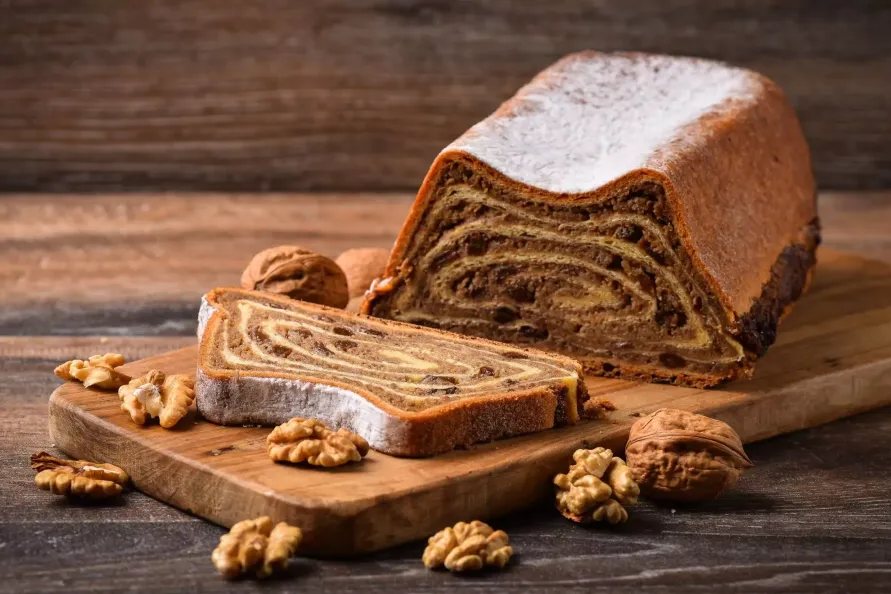
Potica is a rolled yeast pastry with filling and is one of the most recognisable Slovenian festive foods.
Walnut filling is the best known, but tarragon, poppy seed, cottage cheese, hazelnut, and other versions also exist. The pastry is traditionally baked in a round mould with a central opening.
Potica is not simply something sweet to order with coffee. In many families it is connected with Christmas, Easter, weddings, visits, and other important occasions.
The effort matters. Preparing the dough, spreading the filling, rolling it evenly, and baking it successfully require practice. That is why family recipes and techniques can carry strong emotional value.
A shop-bought slice can introduce the flavour. A homemade potica tells a fuller story.
One meal cannot explain the country
These six dishes lead to six different places.
Štruklji open a wide family of recipes. Jota points west toward Primorska and the Karst. Žlikrofi belong to Idrija. Frika leads into the Soča Valley. Bograč places us in Prekmurje. Potica brings us to the festive table.
Other regions would add their own dishes. Bela krajina has pogača. The coast brings fish, olive oil, and salt. Štajerska has its own soups, meats, pastries, pumpkin seed oil, and wine traditions. Alpine areas bring cheeses, žganci, and food connected with mountain pasture.
The point is not to create a final list.
The best first taste of Slovenia is to notice where the food comes from and why it makes sense there.