
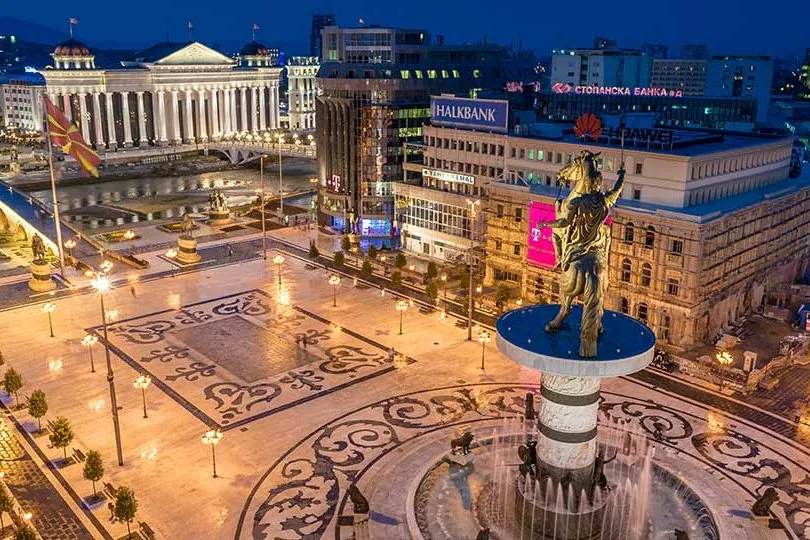
There are many ways to introduce Macedonia.
We could begin with the mountains that shape almost every horizon. We could begin with Ohrid, where the lake changes colour throughout the day and the old town carries centuries of history in its streets. We could begin with Skopje, a city of different neighbourhoods, architectural layers, languages, and communities.
For many of us, however, Macedonia begins with something more personal.
It begins when someone asks whether you have eaten, even before asking why you came. It begins with coffee that lasts much longer than planned, a table that somehow finds room for another guest, music that changes the energy of the whole room, and conversations in which people speak with their hands, faces, and whole hearts.
Macedonia is the country we come from, but it is also the feeling we carry with us. Through these stories, we want to introduce it as we know it. Not only through famous places, but through the details that make those places meaningful.
A country of close distances and strong contrasts
Macedonia is located in Southeast Europe, in the central part of the Balkan Peninsula. It has no sea, but water still plays an important role in the way people imagine and experience the country.
Ohrid, Prespa, and Dojran are more than points on a map. They are places connected with summer memories, family trips, food, music, and local identity. The mountains are equally present. They surround cities, divide regions, shape the climate, and offer a constant sense that nature is close.
The landscape can change quickly. From the busy streets of Skopje, a journey can lead toward the green slopes and villages of Mavrovo, the wide Pelagonia plain, the vineyards of the Vardar region, the old stone houses of Krusevo, or the quieter eastern towns surrounded by fields and mountains.
These places do not tell one single story. Macedonia is made of regional differences, local pride, accents, recipes, landscapes, and memories. Its small size does not make it simple. It makes its contrasts easier to encounter.
The first welcome is usually personal
Hospitality is one of the qualities most often associated with Macedonia, but it is difficult to understand it only as a word.
It is visible in the small insistence that a guest should eat something. It is in the plate placed on the table even when you said you were not hungry. It is in the way a short visit can become an entire evening. It is also in the questions people ask, sometimes with a level of curiosity that may surprise someone visiting for the first time.
This warmth is not performed only for tourists. It is part of family life, friendship, neighbourhoods, and the way many people understand care. Offering food, coffee, advice, or time is often a way of saying that someone is welcome.
Of course, not every person or household is the same. Macedonia is diverse, and its communities express hospitality in different ways. Still, many of us grew up with the feeling that a guest should never leave unnoticed or hungry.
That is why our memories of home are so often connected to people rather than only to places.
Food is how we spend time together
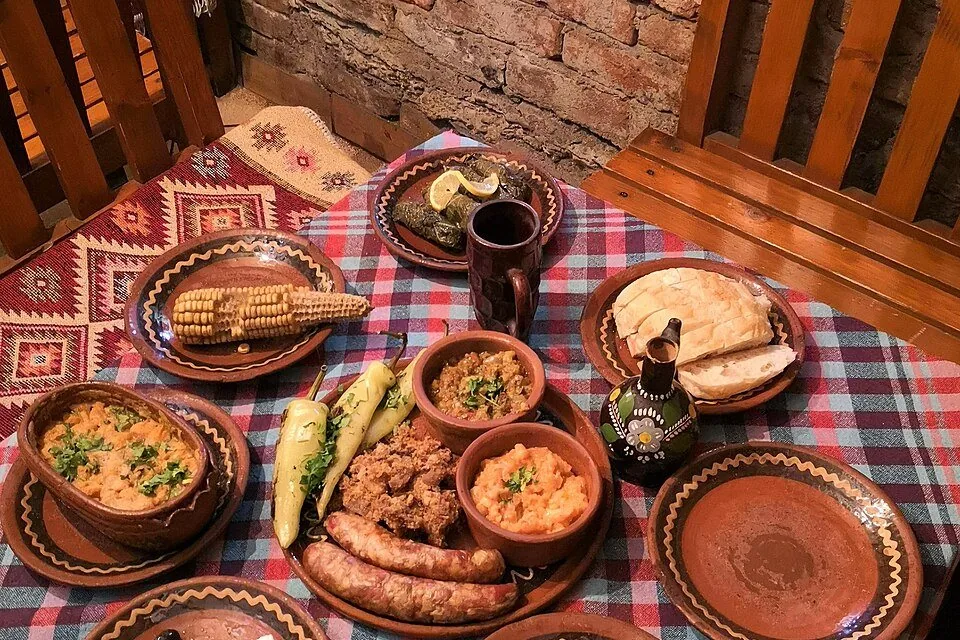
Macedonian food deserves its own stories, and it will have them in this section. Yet food cannot be separated from the way people spend time together.
A meal is rarely only about eating. It is a reason to gather, wait for someone who is late, discuss what happened during the week, retell an old family story, and continue sitting long after the plates are empty.
Different regions bring different dishes and flavours. Tavche gravche, ajvar, shopska salad, pastrmajlija, burek, grilled meat, stuffed peppers, local cheeses, and homemade pastries may appear in different combinations. What often stays the same is the generosity of the table.
The best introduction to Macedonian food is not a list of dishes. It is the experience of being told to take one more serving, then another, while everyone continues talking around you.
In Macedonia, food often becomes a language of affection.
History remains part of the landscape
History in Macedonia is not limited to museums and books. It can be seen in the streets, religious buildings, archaeological sites, old bazaars, monuments, and the way towns developed over time.
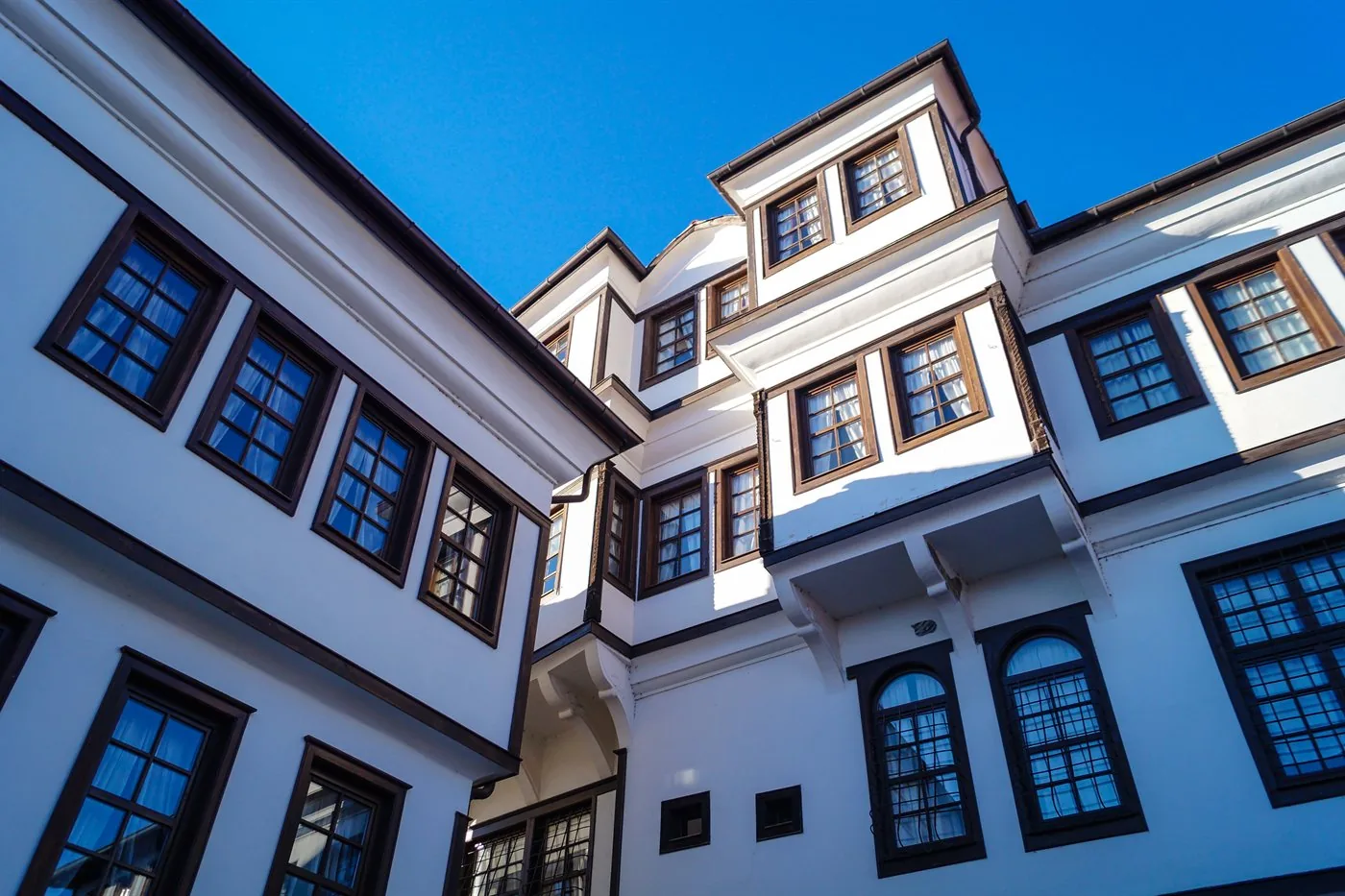
In Skopje, the Old Bazaar carries traces of different periods and communities. In Ohrid, churches, traditional houses, and the lake landscape form a place recognised internationally for both its natural and cultural heritage. Across the country, monasteries appear in mountains and valleys, often in places where the journey is part of the experience.
There are also ancient sites, Ottoman architecture, memorial houses, traditional crafts, and towns whose identity is closely connected with important moments in the country's history.
This heritage is rich, but it can also be complex. It belongs to different communities and periods, and it should be approached with care rather than reduced to a few dramatic sentences.
The most meaningful way to encounter it is often slowly, by walking, listening, and allowing a place to tell more than one story.
A country of many communities
Macedonia is a multiethnic and multicultural country.
Macedonians, Albanians, Turks, Roma, Serbs, Vlachs, Bosniaks, and other communities have shaped its cities, villages, languages, food, music, and traditions. Different religious buildings often stand within the same urban landscape. In markets and neighbourhoods, several languages can be heard within a short walk.
This diversity is part of everyday life. It creates richness, but it also requires understanding, respect, and honest conversation.
For visitors, it is important not to imagine Macedonia as culturally uniform. The country cannot be explained through one tradition, one dish, one city, or one experience. Every region and community adds another layer.
To know Macedonia better is to become curious about these layers rather than trying to flatten them.
Music, language, and the feeling of belonging
Some countries are remembered through images. Macedonia is often remembered through sound.
Music is present at weddings, family celebrations, festivals, restaurants, village gatherings, and ordinary evenings that unexpectedly become lively. A familiar song can change the atmosphere within seconds. Someone begins to sing, another person stands up, and soon an oro forms even when nobody planned it.
The Macedonian language also carries a strong emotional connection for those living abroad. A familiar expression, joke, or accent can immediately make a distant place feel closer to home.
This does not mean that Macedonian culture is fixed in the past. Younger generations mix traditions with contemporary music, art, design, technology, and new ways of expressing identity. The culture continues because people reshape it, not because they keep it untouched.
Belonging is created through this movement between memory and change.
The Macedonia we carry with us
For those of us who live abroad, Macedonia often becomes clearer from a distance.
We begin to miss details that once seemed ordinary. The sound of the neighbourhood in the morning. The mountains visible from the city. The way relatives insist on sending food with us. The familiar chaos of a large gathering. The expressions that do not translate perfectly into another language.
Distance can also help us look at home more honestly. Love for a country does not mean pretending that everything is perfect. It means caring enough to see both its beauty and its challenges.
Through MSOS, we carry pieces of Macedonia into our life in Slovenia. We do this through language, food, music, events, friendships, and the stories we share with others. At the same time, living abroad changes how we understand where we come from.
This section is our invitation to discover Macedonia with curiosity. Come for the landscapes, food, history, and culture. Stay long enough to notice the people, conversations, humour, contradictions, and small moments that make it feel alive.
Welcome to Macedonia. There is always room for one more person at the table.