
Macedonian history is difficult to present through one timeline.
Ancient cities, Roman roads, early Christian mosaics, medieval churches, Ottoman urban spaces, nineteenth-century houses, revolutionary memory, socialist memorial architecture, and contemporary life often stand close to one another.
A broad summary can flatten these differences.
This article takes another approach. It focuses on four places that can be physically walked through. Each one belongs to a different landscape and period. Each one asks the visitor to look at more than a single monument.
They are not the only important sites in Macedonia. They are four clear starting points.
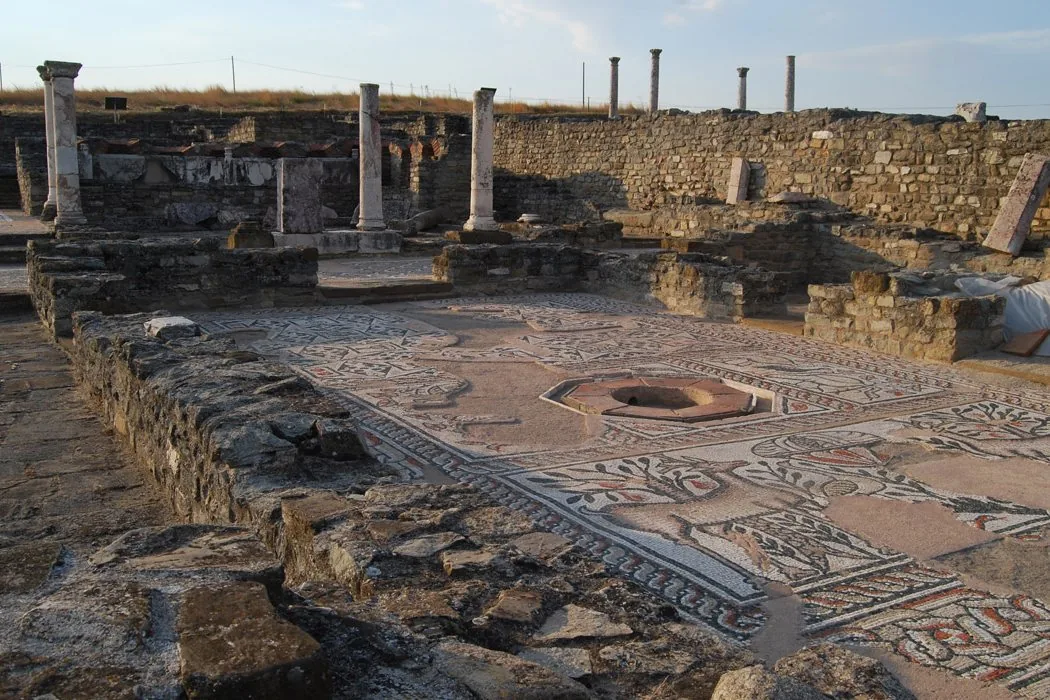
Stobi allows the plan of a city to reappear
Stobi lies near the meeting of the Crna and Vardar rivers, close to an important route through the central part of the country.
The archaeological site contains streets, public buildings, houses, baths, a theatre, basilicas, and mosaics from different phases of the ancient city.
What makes Stobi useful is that the urban structure remains readable.
Visitors do not see one isolated object behind glass. They move along streets, enter the remains of buildings, compare public and domestic spaces, and notice how the settlement changed between Roman and early Christian periods.
Mosaics add detail to the larger plan. Geometric patterns, animals, plants, and symbolic images reveal the visual environment of buildings that otherwise survive mostly through walls and foundations.
The open landscape is part of the experience. Heat, wind, distance, and the rivers help explain why the site developed there.
Stobi should be walked slowly. The meaning lies in the relationship between spaces rather than in one perfect photograph.
Heraclea reveals itself through mosaics and a theatre
Heraclea Lyncestis is located near Bitola.
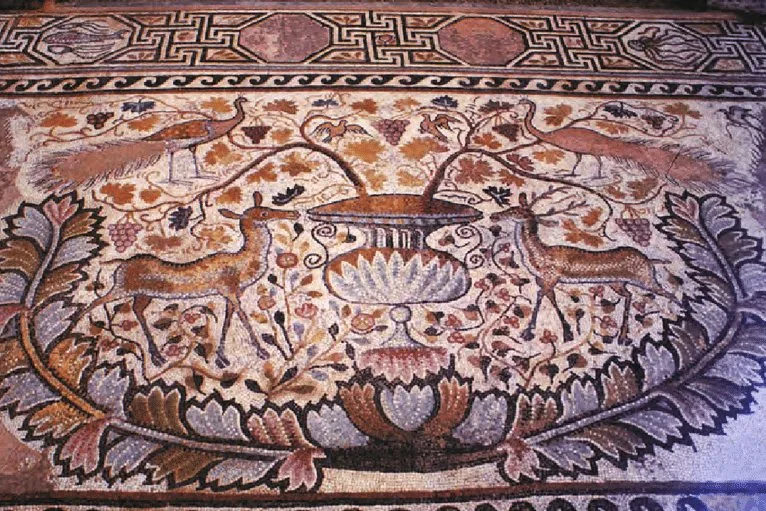
The site includes a Roman theatre, baths, a courtroom portico, early Christian basilicas, an episcopal residence, and large areas of mosaic.
The mosaics are among its strongest features. They contain animals, plants, water creatures, geometric borders, and religious symbolism. Their detail contrasts with the heavier stone structures around them.
The Roman theatre provides another layer. Its restoration and continued cultural use show how an archaeological structure can remain part of contemporary public life.
Heraclea also benefits from its relationship with Bitola. A visit to the site can be combined with the city's Ottoman, consular, religious, and urban heritage, creating a much wider historical picture within a small area.
The site should not be presented only as an ancient ruin. It is also a record of archaeological research, conservation, reconstruction, and decisions about how heritage is shown to the public.
Kokino requires careful wording and close observation
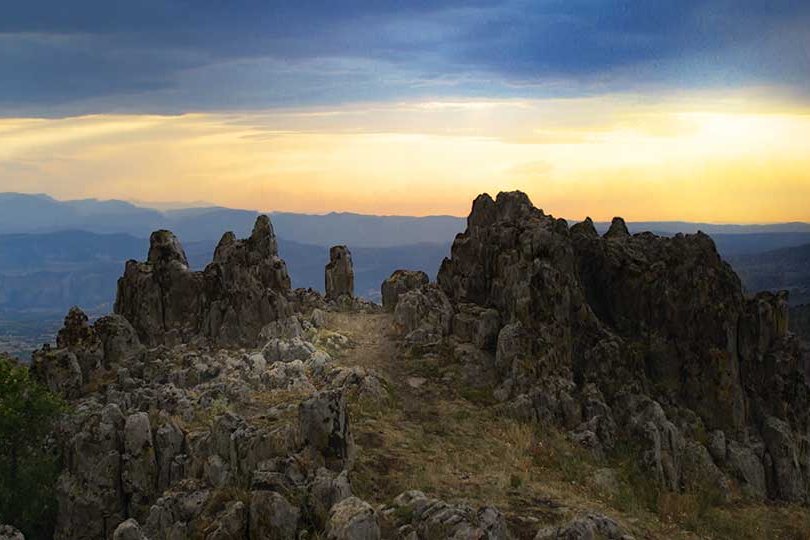
Kokino is an archaeological and archaeoastronomical site near the village of the same name in the municipality of Staro Nagorichane.
It sits on the rocky summit known as Tatićev Kamen, more than one thousand metres above sea level.
The site includes rock formations and markers interpreted in relation to observations of the sun and moon, as well as archaeological evidence of ritual use.
Kokino has been on North Macedonia's Tentative List for UNESCO World Heritage since 2009. This does not mean that it is a fully inscribed World Heritage property. The distinction should always be stated correctly.
The site is visually unusual because the stone itself carries the main evidence. There are no large reconstructed buildings to guide the visitor.
This requires patience. A knowledgeable guide or reliable interpretation helps explain which features are natural, which were modified, and how researchers understand the site's function.
Kokino is a good reminder that heritage can be difficult to see without context. The landscape is the monument.
Krusevo connects streets, houses, and political memory
Krusevo sits high above the Pelagonia region and has a strongly recognisable urban character.
Its steep streets are lined with houses connected with Macedonian and Aromanian building traditions. The town's identity is also closely tied to the Ilinden Uprising of 1903 and the short-lived Krusevo Republic.
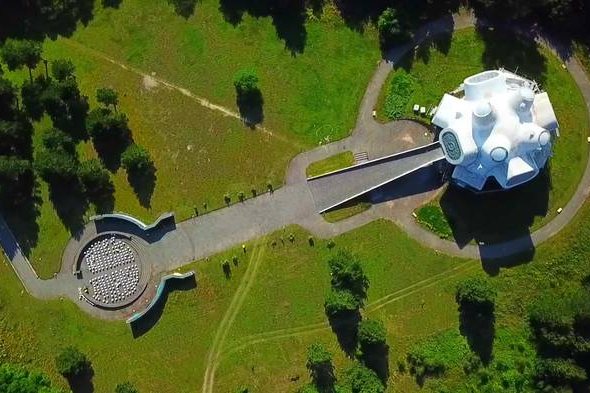
This history appears through museums, memorial sites, Mečkin Kamen, and the Ilinden Monument, commonly known as Makedonium.
Makedonium opened in 1974. Its white sculptural form, coloured windows, interior reliefs, and position at Gumenje make it one of Macedonia's most recognisable examples of memorial architecture from the Yugoslav period.
The building should not be separated from the town below it.
Walking through Krusevo connects political memory with domestic architecture, churches, workshops, views over the surrounding landscape, and the multicultural history of the local community.
The town also carries the legacy of artist Nikola Martinoski and singer Toše Proeski through dedicated cultural institutions.
Krusevo is not one memorial. It is a network of places in which national, local, Aromanian, artistic, and family histories overlap.
The route matters as much as the monument
These four places require different ways of looking.
At Stobi, follow the city plan. At Heraclea, move between architecture and mosaic detail. At Kokino, read the stone landscape with interpretation. In Krusevo, connect memorial architecture with streets and houses.
Moving too quickly reduces each place to its most photographed feature.
A theatre without the basilicas does not explain Heraclea. A view from Makedonium without the town does not explain Krusevo. A dramatic rock at Kokino without careful context becomes mythology. One mosaic at Stobi does not explain an entire city.
Heritage becomes stronger when the route between objects is preserved in the story.
History should not be forced into one identity
Macedonia's heritage comes from different periods, peoples, states, languages, religions, and communities.
This complexity should not be treated as a problem that needs to be simplified.
A responsible article distinguishes between evidence, interpretation, local memory, and national symbolism. It identifies official status correctly. It avoids turning every site into proof of one continuous political story.
Stobi, Heraclea, Kokino, and Krusevo matter for different reasons.
Their value grows when those differences remain visible.
A visit is part of preservation
Archaeological and memorial sites are vulnerable.
Visitors should remain on designated paths, avoid climbing on fragile walls, never remove stone or material, follow photography rules, and use official interpretation where available.
Public attention can support conservation, but heavy or careless use can also cause damage.
Walking through history creates responsibility.
The places in this article have survived through excavation, local memory, institutional care, restoration, and continued public interest. Their future depends on the same combination.