
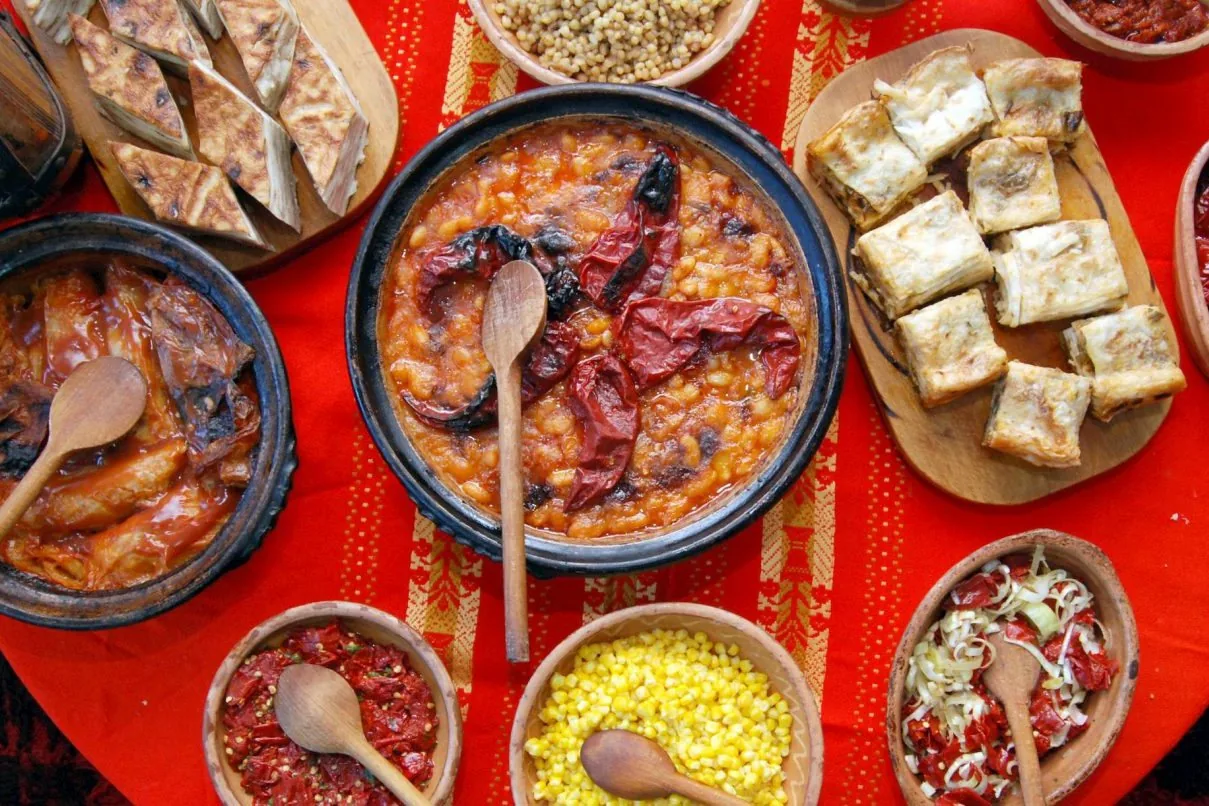
A Macedonian table rarely begins with the main dish.
First come plates that seem small until they cover the whole table. Salad, cheese, peppers, olives, spreads, bread, and something warm may appear before anyone has decided what the full meal will be.
This opening matters because the table is not organised only around hunger. It creates time. People arrive, talk, wait for others, change their order, add another plate, and extend the meal.
The dishes below are familiar across much of the country, but they should not be treated as a complete definition of Macedonian cuisine. Regions, families, communities, seasons, and religious traditions all shape what people cook.
This is one table, not every table.
Shopska salad is often the beginning
Shopska salad is made with tomatoes, cucumbers, peppers, onion, and a generous layer of white cheese.
The ingredients are simple, but the balance matters. Summer tomatoes provide sweetness and acidity. Cucumber keeps the plate fresh. Peppers add another texture, and the grated or crumbled cheese brings salt and richness.
The salad usually arrives early and is shared.
It may be accompanied by bread, olives, roasted peppers, or other small plates. In many restaurants, people continue ordering while the salad is already on the table.
The dish is found across the wider Balkan region, so it should not be presented as belonging exclusively to Macedonia. What is specifically Macedonian is the way it fits into the local meal, often as the first plate in a much longer conversation.
Tavče gravče is simple only on paper
Tavče gravče is one of the dishes most strongly associated with Macedonia.
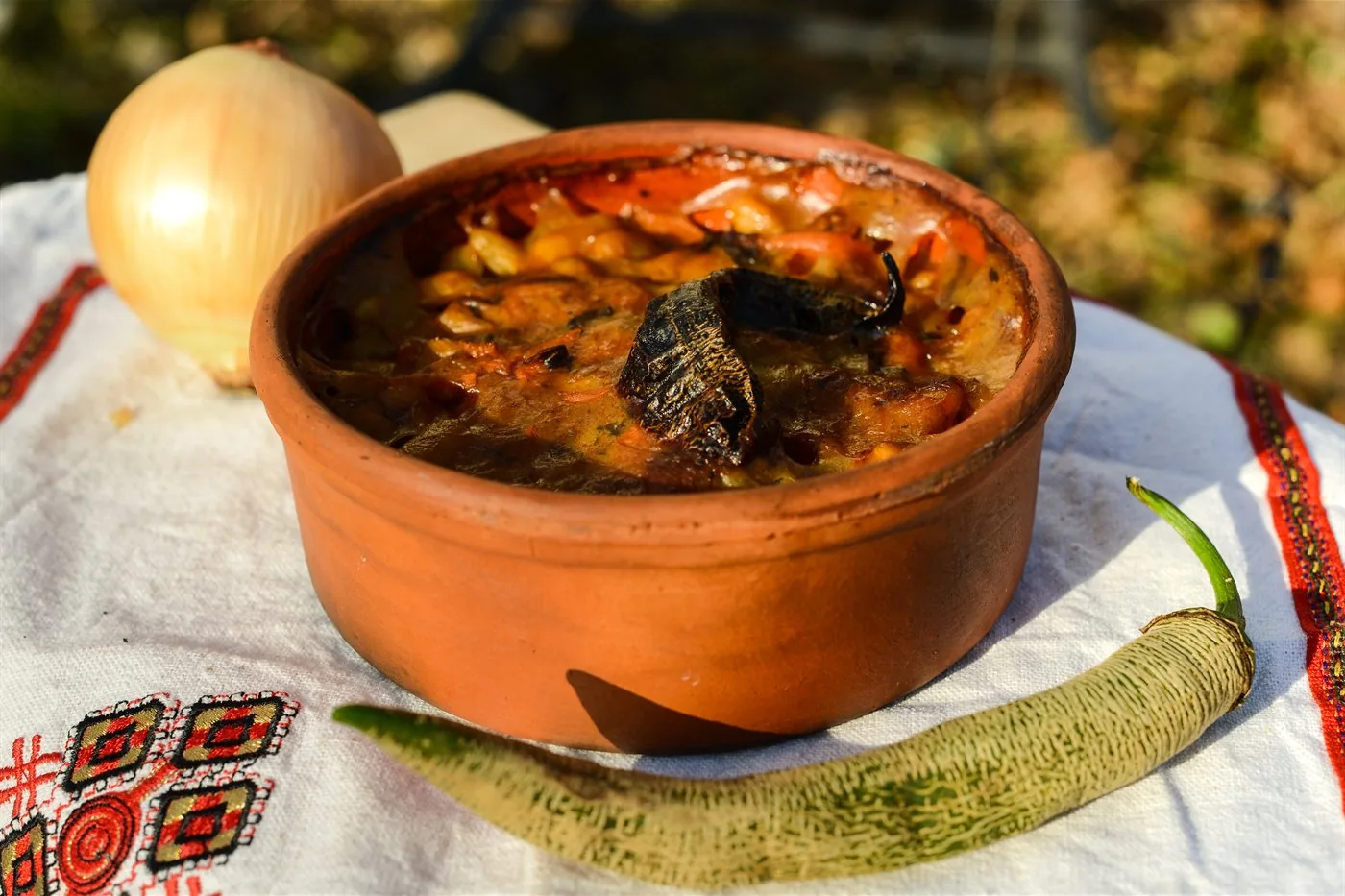
White beans are cooked and then baked in an earthenware dish, usually with onion, paprika, and seasoning. Depending on the household or occasion, meat may be added, but the bean-based version stands on its own.
The name refers directly to the cooking vessel and the beans.
The dish looks simple, but the texture depends on careful preparation. The beans should remain recognisable while the sauce becomes thick and rich. The paprika layer on top adds colour and aroma without turning the dish dry.
Tavče gravče is often described as national food, but its real strength is more ordinary. It is familiar, affordable, filling, and suitable for both home cooking and restaurant menus.
It does not need decoration. Bread and time are enough.
Ajvar is an autumn activity
Ajvar is usually introduced as a red pepper spread.
That description misses the work behind it.
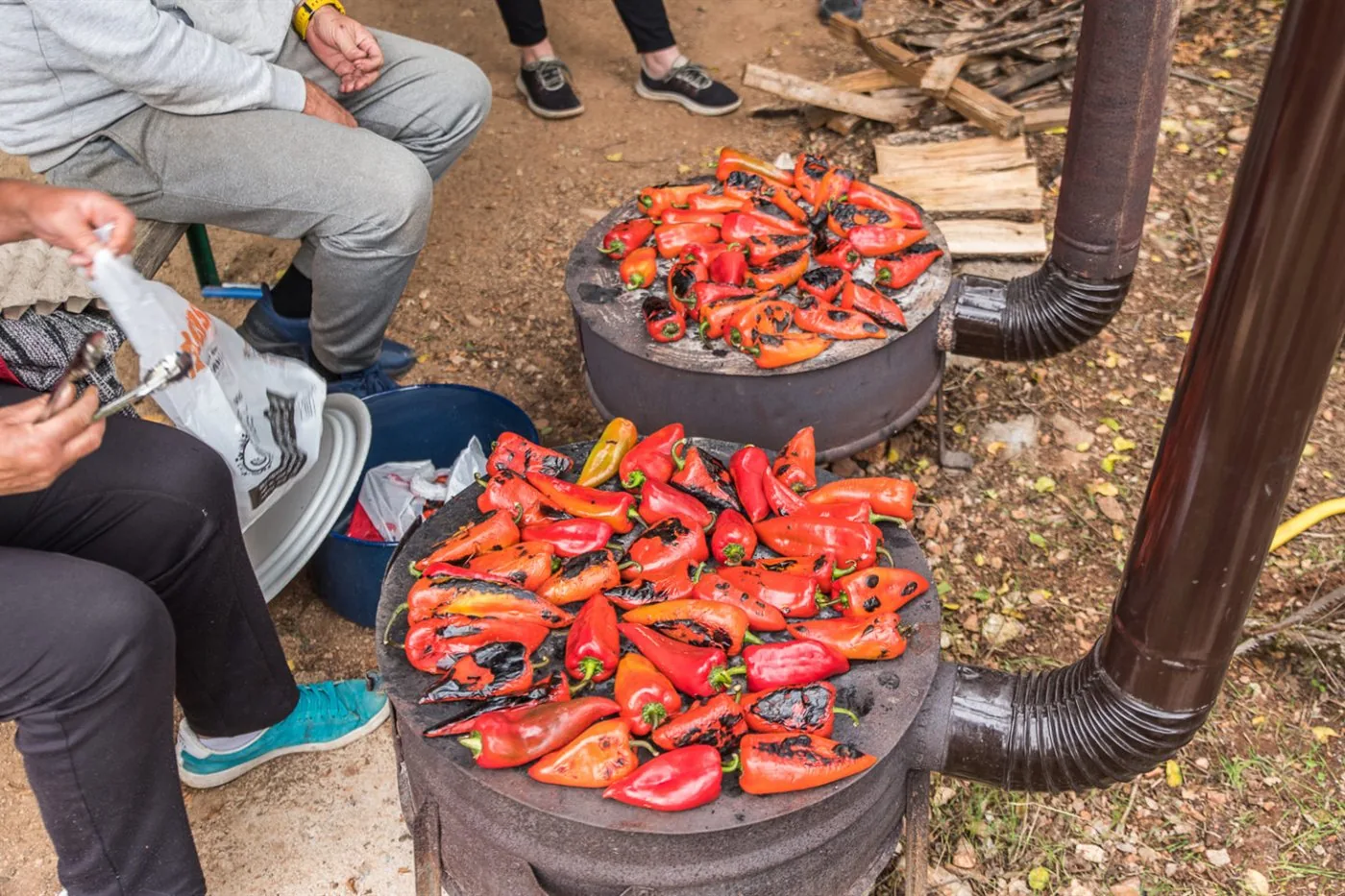
In many families, ajvar is made in early autumn when red peppers are available in large quantities. The peppers are roasted, peeled, cleaned, ground, and cooked slowly. The process can take most of the day and often involves several family members.
The smell of roasted peppers becomes part of the season.
Recipes differ. Some are mild, some hotter. Some include aubergine, while others focus almost entirely on peppers. Families can be very specific about texture, colour, and the amount of oil.
The finished jars are stored for winter and served with bread, cheese, meat, or other meals.
Ajvar is therefore more than a condiment. It is preserved food, shared work, family preference, and a marker of autumn.
Pastrmajlija belongs to particular towns
Pastrmajlija is an oval baked dough topped with pieces of seasoned meat.
It is especially connected with Štip and Veles, where local versions and strong opinions about preparation exist. The shape, dough, meat, and optional additions can vary.
This is not a pizza with a different name.
Its identity comes from the dough, the way the meat cooks into it, and the local context in which it is served. Some versions include egg. Others remain more restrained. The important point is to try it in a place where it is treated as a local speciality rather than a generic fast meal.
Pastrmajlija is a useful example of how one dish can carry city identity. People do not only discuss whether it is good. They discuss where the right version comes from.
Burek is part of the morning
Burek is shared across the Balkans and beyond, but it has a clear place in everyday Macedonian eating.
It is commonly bought from a bakery, often in the morning, and eaten with yoghurt. Meat and cheese versions are widespread, with other fillings also available.
The experience is direct. The pastry should be hot, the layers crisp and soft in the right places, and the portion generous enough to replace breakfast and possibly lunch.
Burek is not a ceremonial dish. That is why it matters.
It belongs to early travel, late nights, quick meetings, work breaks, and the bakery everyone in a neighbourhood knows. People may debate which bakery makes the best one with the seriousness usually reserved for larger questions.
Because burek is part of a wider regional tradition, the article should present the Macedonian relationship with it rather than claim ownership of the dish.
Coffee means the meal is not over
When the plates begin to clear, coffee often arrives.
Macedonian coffee may be prepared in a small pot and served in a small cup, with the grounds settling at the bottom. Espresso and other styles are also common, especially in cafés.
The type of coffee is less important than the time around it.
Coffee creates another stage of the visit. The main meal may be finished, but the conversation is not. Fruit, sweets, or another drink may appear. Someone remembers another story. Plans are made slowly.
This is why a short coffee can last for hours.
For visitors, the useful lesson is not to measure Macedonian hospitality through efficiency. The extra time is part of what is being offered.

The table is a form of welcome
Shopska salad begins the meal. Tavče gravče brings familiarity. Ajvar carries the work of autumn. Pastrmajlija connects food with towns. Burek belongs to the morning. Coffee keeps everyone seated.
Other tables would add sarma, stuffed peppers, selsko meso, pindžur, gjomleze, fish, pies, soups, grilled dishes, seasonal vegetables, and desserts.
Macedonia cannot be reduced to six foods.
The stronger idea is the structure around them. Plates are shared. Portions are offered again. Guests are asked whether they have eaten enough even when the answer is obvious.
A full table is not only proof that food was prepared. It is a way of showing that someone was expected.